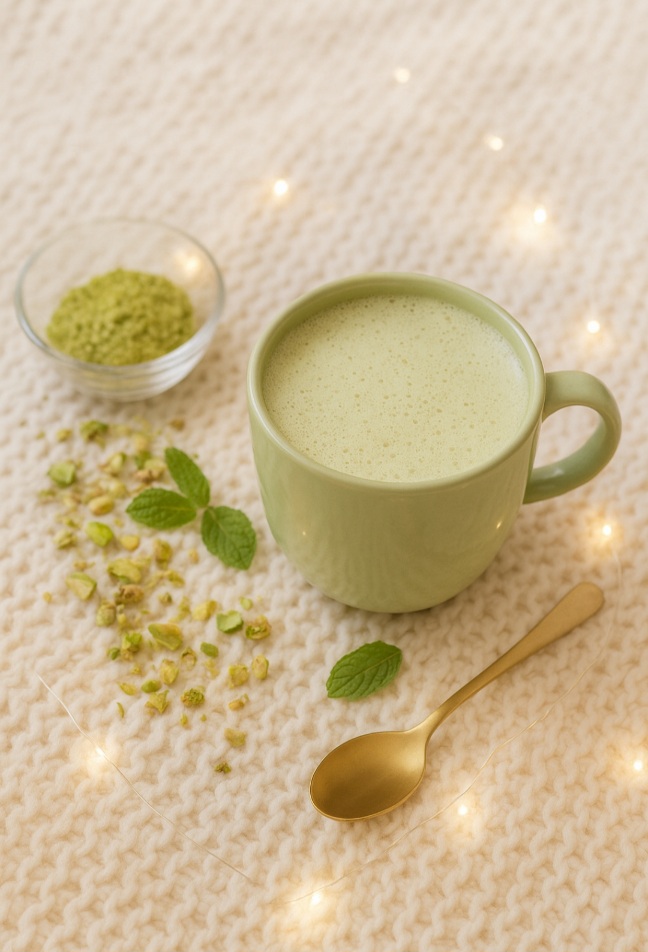
A pistachio latte is a creamy espresso drink with a rich nutty flavor and a subtle sweetness. Made with espresso, milk, and pistachio cream or paste, it brings a café-style flavor to your kitchen without requiring complicated ingredients.
The best part? You can easily adjust the sweetness, milk, and pistachio flavor to create a version that suits your taste.
Prefer the recipe? Jump to Recipe
Whether you’re making a warm latte on a quiet morning or an iced version for a refreshing afternoon drink, this guide will show you how to make a smooth, balanced pistachio latte at home.
You’ll also learn how pistachio cream differs from pistachio paste, which milk works best, how to avoid common texture problems, and how to customize your latte without losing the balance between espresso, milk, and pistachio.
What Is a Pistachio Latte?
A pistachio latte is an espresso-based drink made with milk and pistachio cream or pistachio paste.
Unlike a traditional latte, which primarily combines espresso and milk, the pistachio version adds a distinctive nutty flavor and extra creaminess. Depending on the pistachio ingredient you use, the drink can range from lightly sweet and subtle to rich and dessert-like.
The basic formula is simple:
Espresso + Milk + Pistachio = Pistachio Latte
The key to a well-balanced version is not simply adding more pistachio. The espresso should remain noticeable, while the milk provides body and the pistachio adds its characteristic nutty flavor.
That balance is what makes a homemade pistachio latte taste more like a thoughtfully prepared café drink rather than simply sweetened coffee.
What Does a Pistachio Latte Taste Like?
A pistachio latte typically has a creamy texture with a mild-to-moderate nutty flavor. The exact taste depends heavily on the pistachio ingredient you choose.
A sweetened pistachio cream can create a richer, sweeter drink with a dessert-like character, while an unsweetened pistachio paste usually gives you more control over sweetness and can allow the natural pistachio flavor to stand out.
The espresso adds bitterness and depth, while the milk softens the coffee and helps bring the flavors together.
For the best result, aim for a drink where none of the three main flavors completely overwhelms the others.
Pistachio Latte Ingredients
You only need a few ingredients to make a smooth pistachio latte at home. The quality and balance of these ingredients matter more than having a long list of additions.
Espresso
Use 1 shot of freshly brewed espresso (about 30 ml).
A balanced espresso works best because it provides enough coffee flavor to stand up to the richness of the pistachio and milk.
If you don’t have an espresso machine, you can use strongly brewed coffee from a moka pot as an alternative.
Milk
Use 200 ml of milk.
Whole milk gives the richest and creamiest result, but you can also use oat, almond, soy, or pistachio milk depending on your preference.
For plant-based versions, barista-style milk is often a good choice when you want a smoother texture and better frothing.
Pistachio Cream or Pistachio Paste
Use 1½ tablespoons of pistachio cream or pistachio paste.
This is the ingredient that gives the latte its characteristic pistachio flavor.
Because products vary considerably in sweetness and concentration, you may need to adjust the amount slightly.
Sweetener
Sweetener is optional.
If you’re using sweetened pistachio cream, you may not need any additional sugar.
If you’re using unsweetened pistachio paste, add a small amount of sugar, honey, maple syrup, or another sweetener if desired.
Taste before adding more.
Pistachios for Garnish
A small amount of finely chopped pistachios is optional.
They add a pleasant crunch and make the finished drink look more inviting, but the garnish isn’t necessary for the flavor of the latte
Pistachio Cream vs. Pistachio Paste: What’s the Difference?
If you’ve never made a pistachio latte before, you may wonder why recipes mention both pistachio cream and pistachio paste.
Although they’re related, they aren’t exactly the same ingredient.
Pistachio Cream
Pistachio cream is generally a sweetened, creamy pistachio preparation.
Depending on the product, it may contain pistachios along with ingredients such as sugar, milk or milk-derived ingredients, oils, or other components that create a smooth, spreadable texture.
Because it is often already sweet, pistachio cream is convenient when you want a rich, sweet, café-style latte without adding much extra sweetener.
Pistachio Paste
Pistachio paste is usually more focused on the pistachio itself and may contain little or no added sugar, depending on the product.
It can have a thicker texture and a more concentrated nutty flavor.
This makes it a good option if you want greater control over sweetness or prefer a more pronounced pistachio taste.
Which One Should You Use?
For a sweeter, creamier latte, pistachio cream is an easy choice.
For a more natural pistachio flavor and greater control over sweetness, choose pistachio paste.
Always check the ingredient list and nutrition label of the specific product you’re using, because formulations can vary considerably between brands.
Pistachio Cream vs. Pistachio Paste — Quick Comparison
Product formulations vary, so always check the label of the specific pistachio cream or paste you use
How to Make a Hot Pistachio Latte
Making a hot pistachio latte at home is simple once you get the order of the steps right.
The key is to create a smooth pistachio-espresso base before adding the milk. This helps distribute the pistachio flavor evenly and gives the finished drink a smoother texture.
Step 1: Brew the Espresso
Prepare 1 shot of espresso (about 30 ml) and pour it into your serving mug.
For the best flavor, use freshly brewed espresso with a balanced taste. You want enough coffee character to complement the pistachio without overpowering it.
Step 2: Blend in the Pistachio
Add 1½ tablespoons of pistachio cream or pistachio paste to the hot espresso.
Stir thoroughly until the mixture is smooth and well combined.
If you’re using unsweetened pistachio paste, taste the mixture before adding any sweetener.
Step 3: Heat and Froth the Milk
Warm 200 ml of milk until hot and steamy, but do not boil it.
Froth the milk until it has a smooth, fine texture rather than large, stiff bubbles.
Step 4: Combine and Finish
Slowly pour the warm milk into the pistachio-espresso mixture.
Pour gently to preserve the creamy texture and foam.
If desired, finish with a small amount of finely chopped pistachios.
Serve immediately while the milk and foam are fresh.
For exact measurements and the quick version of the recipe, jump to the Pistachio Latte Recipe.
How to Make an Iced Pistachio Latte
An iced pistachio latte is a refreshing alternative to the hot version, with the same creamy pistachio flavor served over ice.
The main difference is that the espresso should be allowed to cool slightly before it meets the ice. This helps prevent the ice from melting too quickly and keeps the drink more balanced.
Step 1: Prepare the Espresso
Brew 1 shot of espresso (about 30 ml).
Set it aside for a few minutes to cool slightly. It doesn’t need to become completely cold.
Step 2: Create the Pistachio-Espresso Base
Add 1½ tablespoons of pistachio cream or pistachio paste to the espresso.
Stir until completely smooth.
If you’re using unsweetened pistachio paste, add sweetener at this stage if desired.
Step 3: Build the Drink
Fill a tall glass with 6–8 ice cubes.
Pour 180 ml of cold milk over the ice.
Slowly pour the pistachio-espresso mixture over the milk.
The espresso may create attractive layers as it meets the cold milk.
Step 4: Stir and Serve
For a layered presentation, serve the drink as it is.
For a fully blended flavor, give it a good stir before drinking.
Add finely chopped pistachios on top if desired.
For the complete ingredient list and quick preparation method, jump to the Pistachio Latte Recipe.
Choosing the Best Milk for a Pistachio Latte
The milk you choose can change the texture, sweetness, and overall character of a pistachio latte.
There isn’t one milk that’s right for everyone. The best choice depends on whether you want a rich and creamy drink, a lighter texture, or a plant-based option.
Whole Milk
Whole milk is the classic choice for a rich, creamy pistachio latte.
Its fuller texture works especially well with the richness of pistachio cream or paste and creates a smooth, satisfying drink.
Best for: a classic café-style pistachio latte
Oat Milk
Oat milk is a popular plant-based choice because it can create a naturally creamy texture and mild sweetness.
A barista-style oat milk is especially useful if you want to steam and froth your milk.
Best for: a creamy dairy-free pistachio latte
Almond Milk
Almond milk creates a lighter drink and adds another subtle nutty note.
Its flavor can work particularly well if you want the pistachio to remain noticeable without making the latte feel too rich.
Best for: a lighter, nuttier latte
Soy Milk
Soy milk can provide a creamy texture and works well with espresso.
Its flavor is somewhat more noticeable than some other plant-based milks, so choose one you enjoy on its own.
Best for: a fuller plant-based latte
Pistachio Milk
Pistachio milk can reinforce the nutty character of the drink, although its flavor and creaminess vary between products.
If you use pistachio milk, consider choosing an unsweetened or lightly sweetened version so the latte doesn’t become overly sweet.
Best for: emphasizing the pistachio flavor
Pistachio Latte Milk Comparison
If you’re making a pistachio latte for the first time, whole milk or barista-style oat milk are good places to start.
Once you know which texture and flavor you prefer, you can experiment with other options
Pistachio Latte Tips & Troubleshooting
A few small details can make a noticeable difference in the final drink. If your pistachio latte tastes unbalanced or doesn’t have the smooth texture you expected, these simple adjustments can help.
How to Prevent Pistachio From Clumping
Pistachio cream or paste can sometimes remain in small lumps instead of blending smoothly into the espresso.
The easiest solution is to mix it thoroughly with the hot espresso before adding the milk.
If your pistachio paste is particularly thick, let it soften slightly at room temperature before preparing the latte.
How to Prevent the Pistachio From Separating
Separation can happen when the pistachio ingredient doesn’t emulsify well with the liquid.
Mixing the pistachio with the hot espresso first usually produces a more consistent base.
Avoid simply dropping a large spoonful of cold pistachio paste into the finished latte and expecting it to dissolve evenly.
How to Avoid a Bitter Pistachio Latte
If your latte tastes too bitter, the problem may not be the pistachio.
A very dark or over-extracted espresso can overpower the delicate flavor of pistachio.
Try using a more balanced espresso and make sure your coffee isn’t over-extracted.
If you’re using unsweetened pistachio paste, a small amount of sweetener can also help balance bitterness.
How to Avoid an Overly Sweet Latte
Sweetened pistachio cream can contain enough sugar that additional sweetener isn’t necessary.
Start without adding sugar, taste the finished drink, and add more only if needed.
This gives you much better control over the final flavor.
How to Get Better Milk Foam
For a smooth latte texture, aim for fine, silky foam rather than a thick layer of large bubbles.
Heat the milk gradually and avoid boiling it.
If you’re using plant-based milk, barista-style versions generally work better for steaming and frothing.
Pistachio Latte Variations
Once you’ve mastered the basic pistachio latte, you can easily adjust it to create different flavors and textures.
The goal is to change one element at a time so the pistachio and espresso remain balanced.
Vanilla Pistachio Latte: Add ¼ teaspoon of vanilla extract to the espresso and pistachio mixture. Vanilla adds a soft aromatic note that pairs naturally with the creamy pistachio flavor.
Honey Pistachio Latte: For a naturally sweet variation, add 1 teaspoon of honey to the hot espresso and pistachio mixture. Stir well before adding the milk. Because pistachio cream may already contain sugar, taste the latte first if you’re using sweetened cream.
Chocolate Pistachio Latte: Add 1 teaspoon of unsweetened cocoa powder to the espresso and pistachio mixture. Stir thoroughly until smooth. The cocoa adds a deeper chocolate note without requiring a large amount of chocolate syrup.
Iced Pistachio Latte: The iced version is already covered in the recipe above, but you can customize it further with different milk choices or a little extra pistachio flavor. For the cleanest result, keep the amount of sweetener modest so the cold milk doesn’t make the drink taste overly sweet.
Pistachio Latte With a Stronger Coffee Flavor: If you prefer coffee-forward drinks, you can use a slightly more concentrated coffee base rather than simply adding more pistachio. This keeps the pistachio flavor present while allowing the espresso to remain the main coffee character.
How to Store Pistachio Ingredients & Leftover Latte
Proper storage can help maintain the quality of your pistachio ingredients and prevent unnecessary waste.
Storing Pistachio Cream or Paste
Always follow the storage instructions on the product you’re using.
Some pistachio creams and pastes are shelf-stable before opening, while others require refrigeration.
After opening, keep the product tightly sealed and store it according to the manufacturer’s instructions.
If you notice an unusual smell, visible mold, significant discoloration, or an otherwise questionable change in the product, discard it.
Can You Make Pistachio Latte Ahead of Time?
A pistachio latte is best enjoyed shortly after preparation.
The espresso, milk, and pistachio can change in texture when the drink sits for a long time, and the foam will gradually disappear.
For the best café-style texture, prepare the latte fresh.
Can You Store Leftover Pistachio Latte?
It’s generally better to make only the amount you plan to drink.
If you have leftover latte, refrigerate it promptly in a covered container rather than leaving it at room temperature.
The texture may change during refrigeration, particularly if the drink contains milk foam.
Before consuming leftovers, check their smell and appearance. When in doubt, discard them.
Pistachio Latte Recipe
This simple recipe makes 1 pistachio latte and includes both hot and iced options.
Hot Pistachio Latte
Prep time: 5 minutes
Total time: 5 minutes
Servings: 1
Ingredients
- 1 shot espresso (about 30 ml)
- 200 ml whole milk or your preferred milk
- 1½ tablespoons pistachio cream or pistachio paste
- Sweetener, optional
- Finely chopped pistachios, optional, for garnish
Instructions
1. Brew the espresso and pour it into your serving mug.
2. Stir in the pistachio cream or paste until smooth.
3. Taste and add sweetener if needed.
4. Heat and froth the milk without boiling it.
5. Slowly pour the milk into the pistachio-espresso mixture.
6. Garnish with chopped pistachios if desired.
7. Serve immediately.
Iced Pistachio Latte
Prep time: 5 minutes
Total time: 5 minutes
Servings: 1
Ingredients
- 1 shot espresso (about 30 ml)
- 180 ml cold milk
- 1½ tablespoons pistachio cream or pistachio paste
- 6–8 ice cubes
- Sweetener, optional
- Finely chopped pistachios, optional
Instructions
1. Brew the espresso and allow it to cool slightly.
2. Stir in the pistachio cream or paste until smooth.
3. Add sweetener if needed.
4. Fill a tall glass with ice.
5. Pour in the cold milk.
6. Slowly add the pistachio-espresso mixture.
7. Garnish with chopped pistachios if desired.
8. Stir before drinking.
Recipe Notes
- Sweetened pistachio cream may not need additional sugar.
- Unsweetened pistachio paste gives you more control over sweetness.
- Whole milk creates the richest texture, while barista-style oat milk is a good dairy-free option.
- Mixing the pistachio ingredient with espresso before adding the milk helps create a smoother drink.
- For the iced version, slightly cooling the espresso helps reduce rapid ice melting
Pistachio Latte FAQ
Can I make a pistachio latte without an espresso machine?
Yes. If you don’t have an espresso machine, you can use strongly brewed coffee made with a moka pot or another method that produces a concentrated coffee.
The flavor and strength will be somewhat different from espresso, but the drink can still be delicious.
Is pistachio cream the same as pistachio paste?
No. Pistachio cream is generally a sweeter, creamier preparation, while pistachio paste is usually more concentrated on pistachio flavor and may contain little or no added sugar.
Because formulations vary, always check the product label.
Can I use pistachio milk in a pistachio latte?
Yes. Pistachio milk can reinforce the nutty flavor of the drink.
For a balanced result, consider using an unsweetened or lightly sweetened pistachio milk, especially if your pistachio cream is already sweetened.
Can I make a pistachio latte with plant-based milk?
Absolutely.
Oat, almond, soy, and pistachio milk can all work well. Barista-style versions are often easier to steam and froth.
The best choice depends on whether you prefer a richer, lighter, or more distinctly nutty drink.
Why does my pistachio latte separate?
Separation can happen when the pistachio ingredient isn’t thoroughly incorporated into the liquid.
For a smoother drink, mix the pistachio cream or paste with the hot espresso before adding the milk.
How can I make my pistachio latte less sweet?
Start with an unsweetened pistachio paste or use less sweetened pistachio cream.
You can also choose an unsweetened milk and avoid adding extra sweetener until you’ve tasted the finished drink.
Can I make a pistachio latte ahead of time?
It’s best prepared fresh.
The flavor and texture can change as the espresso and milk sit, and milk foam doesn’t hold its texture for long.
Is a pistachio latte served hot or iced?
Both.
A hot pistachio latte is creamy and comforting, while an iced pistachio latte is refreshing and works especially well in warmer weather.
What can I use instead of pistachio cream?
You can use pistachio paste instead.
If the paste is unsweetened, adjust the sweetness of the drink separately according to your taste.
Final Thoughts
A good pistachio latte doesn’t need a complicated recipe or a long list of ingredients.
With a balanced espresso, creamy milk, and a good-quality pistachio cream or paste, you can make a flavorful café-style drink at home in just a few minutes.
The most important step is creating a smooth pistachio-espresso base before adding the milk. From there, you can adjust the sweetness, milk, and pistachio intensity to suit your taste.
Try the hot version when you want something warm and comforting, or make the iced version when you’re looking for a cool and refreshing coffee drink.
Once you’ve found your favorite combination, this simple pistachio latte can easily become one of your go-to homemade coffee drinks.