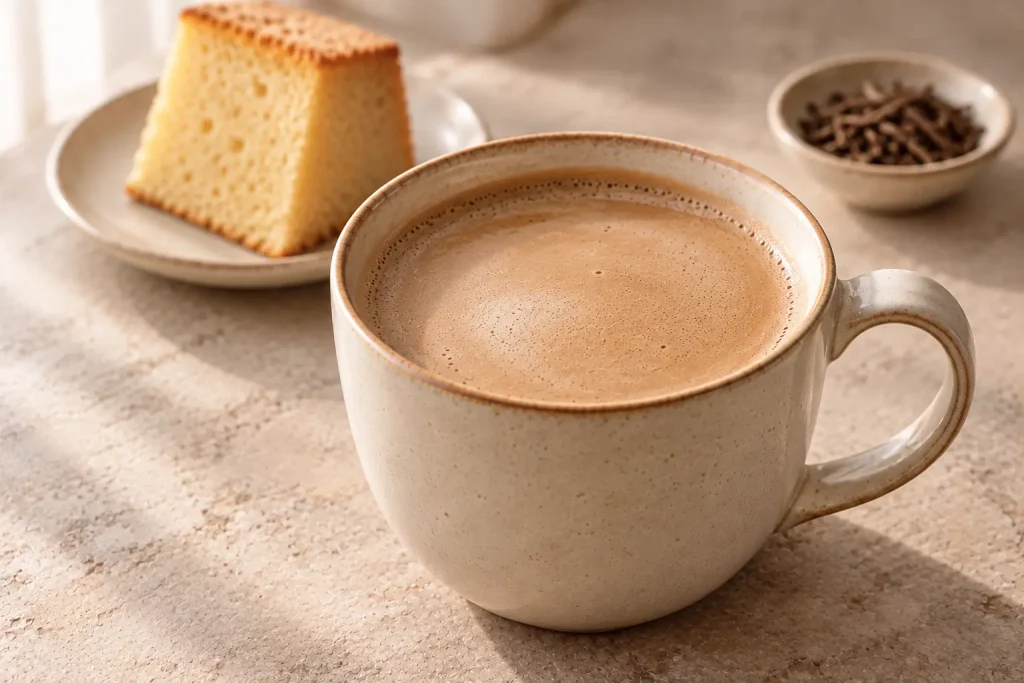
A hojicha latte combines the warm, roasted character of Japanese green tea with creamy milk for a drink that tastes distinctly different from a coffee latte. Hojicha brings toasted, nutty notes and a gently caramel-like aroma, while the milk softens the tea without needing to cover it with lots of sweetness.
This hot hojicha latte uses pure, unsweetened hojicha powder rather than espresso, along with a simple technique that helps the powder disperse evenly while keeping the roasted tea character at the center of the drink. The powder is first mixed with a small amount of hot water to create a concentrated base, then gradually loosened before lightly frothed milk is added. Sweetener is optional, so you can taste the roasted tea first and adjust from there.
The goal is a balanced cup: creamy and silky, but still unmistakably hojicha.
What Is a Hojicha Latte?
A hojicha latte is a tea latte made by combining roasted Japanese green tea with milk. Despite hojicha’s brown color and deeply roasted aroma, it is still green tea—the darker color and distinctive character come from roasting.
Hojicha can be prepared as loose-leaf tea or ground into a fine powder for drinks and cooking. For this recipe, we use pure unsweetened hojicha powder. Because the powder is dispersed directly into the drink rather than brewed and strained out, it works especially well for the fuller, tea-forward style of latte we’re making here.
And despite the word latte, a standard hojicha latte does not need espresso. Here, the latte is built around tea and milk. Adding espresso creates a different drink, often called a dirty hojicha latte.
What Does Hojicha Taste Like?
Hojicha is defined by its roasted character. Depending on the tea and roast, you may notice nutty, gently sweet, and deeply toasted notes, with some hojicha tasting more robust while others are lighter and more aromatic.
That roasted character works particularly well with milk. The milk softens the sharper edges and adds creaminess, but a well-balanced hojicha latte should still taste clearly of the tea. If the cup tastes mostly like warm milk, the balance has shifted too far.
Hojicha powders can also vary in roast level and intensity, so the same recipe may taste slightly different from one product to another. That variation is normal. In this recipe, the 3 g of hojicha powder is balanced against 165 ml of milk so the roasted tea remains recognizable without making the drink unnecessarily intense.
Hojicha Powder or Loose Leaf?
You can make a hojicha latte with either hojicha powder or loose-leaf hojicha, but the two methods work differently.
For this recipe, we use pure unsweetened hojicha powder. The powder is whisked directly into water, so none of the tea is strained away before the milk is added. This can give the drink a fuller body and makes it practical to build a tea-forward latte with consistent proportions. It also keeps the method simple: there is no separate steeping and straining step.
Loose-leaf hojicha is equally legitimate, but it needs a different approach. The leaves are brewed in water and removed before the tea is combined with milk, so a latte usually calls for an infusion concentrated enough to remain noticeable after dilution with milk. Brewing recommendations also vary with the tea itself; unlike the powder method in this recipe, loose-leaf hojicha may be prepared with boiling water.
For the latte we’re making here, powder gives us the combination we want: a fuller texture, a clearly roasted tea presence, and a straightforward method for a home kitchen. Choose a pure hojicha powder without added sugar or powdered creamer so you can control the milk and sweetness yourself.
How to Make a Hojicha Latte?
This recipe makes one hot hojicha latte with about 210 ml of liquid before the milk is aerated. A 240–300 ml mug gives you enough room for the lightly frothed milk.
Ingredients
- 3 g pure unsweetened hojicha powder
- 45 ml hot water at 80°C / 176°F, divided
- 165 ml milk
- Up to 1 tsp pure maple syrup, optional
Equipment
You’ll need a small bowl or cup, a fine-mesh sieve, a small whisk or handheld frother, and a 240–300 ml mug. A kitchen scale is useful for measuring the hojicha powder accurately.
A bamboo whisk (chasen) works well if you have one, but it isn’t necessary. You also don’t need an espresso machine or steam wand.
1. Sift and pre-wet the hojicha
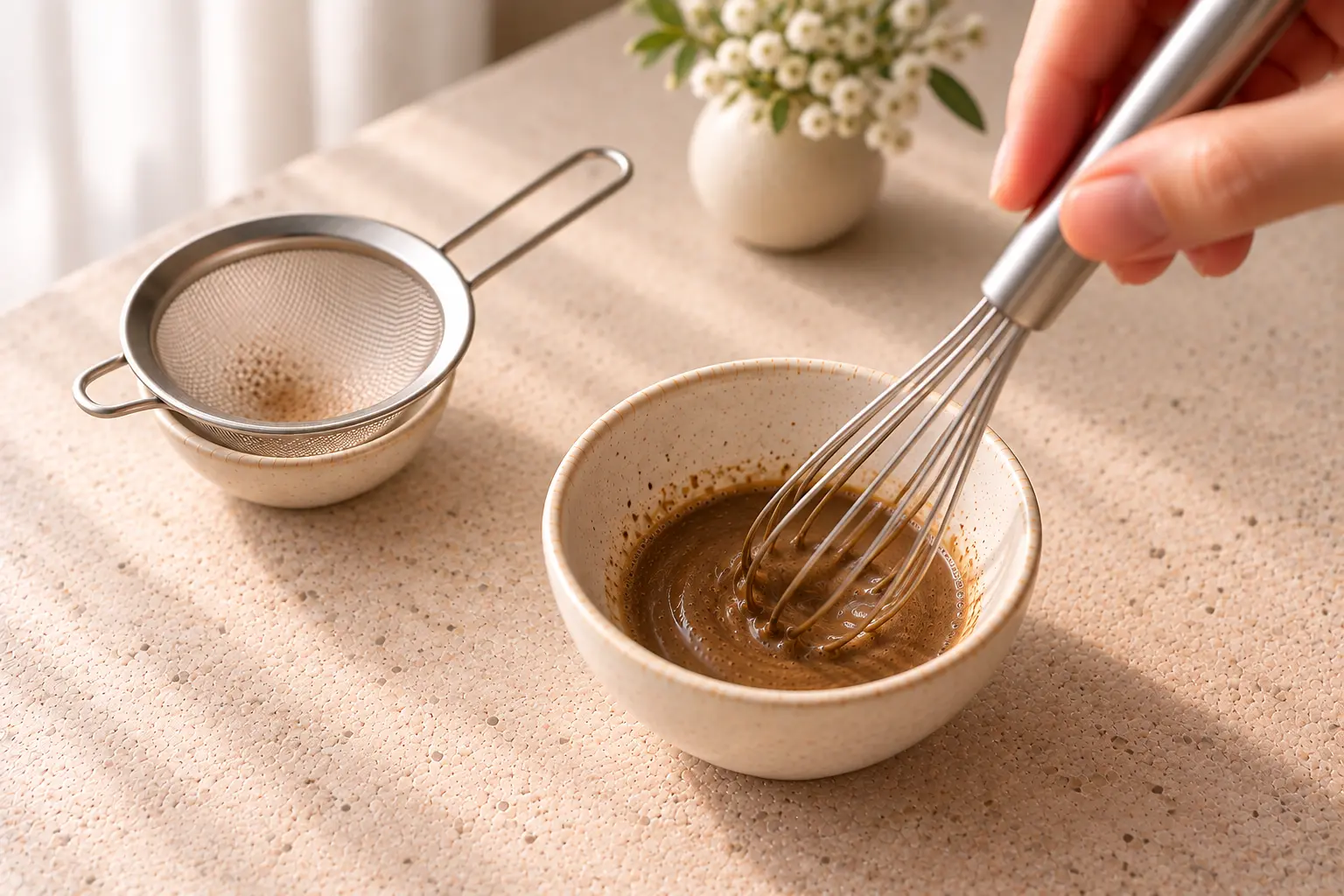
Sift 3 g of hojicha powder into a small bowl. Add about 15 ml of the hot water and whisk until the powder is evenly dispersed and you have a smooth, concentrated base.
2. Add the remaining water
Gradually whisk in the remaining 30 ml of hot water. The hojicha should look evenly mixed, without obvious dry pockets or large clumps.
MyHomeDrinks Tip: Rather than adding all 45 ml of water at once, try starting with the smaller amount above and loosening the concentrated base gradually. Pre-wetting the sifted powder this way can make it easier to disperse evenly before the mixture is diluted.
If you already know you prefer a lightly sweetened latte, you can stir up to 1 tsp pure maple syrup into the warm hojicha base at this point. Otherwise, leave it unsweetened and taste the finished drink first.
3. Heat and lightly froth the milk
Heat 165 ml of milk to about 60–65°C / 140–149°F. Lightly froth it until the texture is smooth and silky rather than stiff or heavily foamed.
No steam wand is required. A handheld frother works well, or you can simply warm the milk and whisk it by hand.
4. Assemble and taste
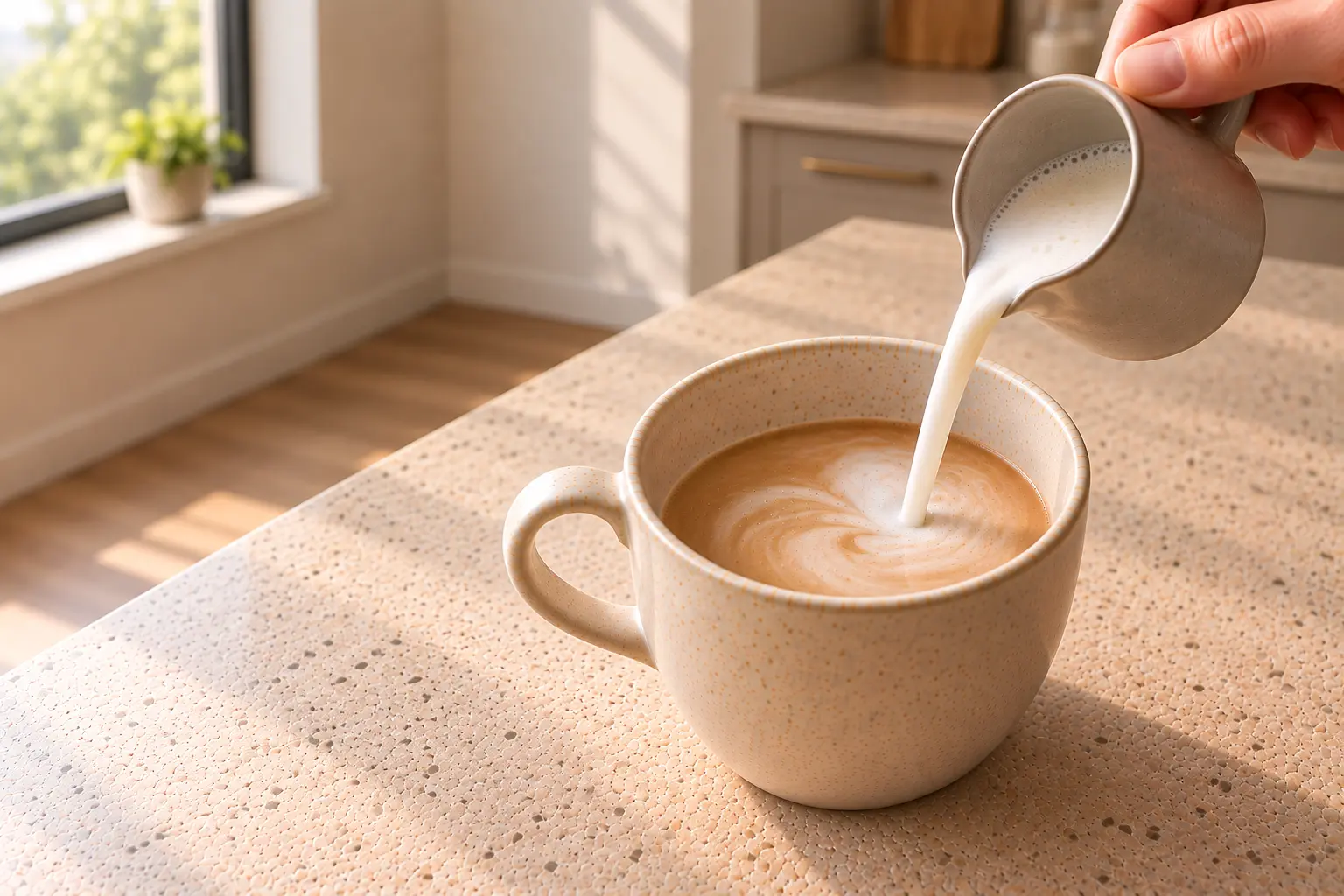
Pour the warm hojicha base into your mug, then add the milk, holding back any large bubbles if necessary. Give the drink a gentle stir so the tea and milk are evenly combined.
Taste before adding more sweetness. If you left the latte unsweetened and want a softer, sweeter finish, stir in a little maple syrup to taste, keeping the total amount to about 1 tsp or less.
Serve warm.
How to Keep Hojicha Powder Smooth?
Hojicha powder behaves differently from an instant drink mix. It disperses through the water rather than simply disappearing into it, so the goal is an evenly mixed latte—not to make every trace of tea powder vanish.
Sifting before whisking helps break up dry clumps, while starting with a small amount of water makes it easier to work the powder into a smooth base. Once that base is even, the remaining water can be incorporated gradually. This is why the order in the recipe matters more than simply whisking harder at the end.
If you still see clumps, check the mixture before adding the milk. Dry pockets are much easier to smooth out while the hojicha base is still concentrated. A small whisk, handheld frother, or bamboo whisk can all work; good dispersion matters more than owning a particular tool.
If you notice a little settling as the latte sits, a gentle stir before the last few sips is enough. A small amount of fine tea sediment is not the same as a poorly mixed, gritty latte.
Choosing Milk for Hojicha Latte
The milk you choose changes both the texture of a hojicha latte and how clearly you perceive the roasted tea. There isn’t one milk that everyone needs to use, so it makes more sense to choose according to the balance you want in the cup.
Whole dairy milk gives the latte a creamy body and a rounded texture. If you prefer a plant-based option, oat milk can also create a full, creamy drink, although some oat milks can taste noticeably sweet, which may reduce the need for added maple syrup. Soy milk is another practical choice, with a different flavor and body that may be more noticeable alongside the tea.
Whichever milk you use, the same principle applies: it should support the hojicha rather than bury it. That is one reason this recipe uses 165 ml of milk instead of simply filling a large mug—the amount of milk is part of the flavor balance, not just the serving size.
If you switch between milks, taste the latte before adding sweetener. A milk that already tastes noticeably sweet may need little or no maple syrup.
Does Hojicha Latte Need Sweetener?
Not necessarily. Hojicha already has a roasted aromatic character that can come across as gently sweet, and milk can soften the tea further. Starting without sweetener lets you taste that balance before deciding whether the cup needs anything else.
If you prefer a slightly sweeter latte, a small amount of pure maple syrup works well with the roasted profile without needing to turn the drink into a flavored latte. In this recipe, up to about 1 tsp is enough to adjust the sweetness while keeping the hojicha at the center.
Treat that amount as a limit rather than a target. Your hojicha powder and milk both affect how the finished latte tastes, so start with less—or none at all—and adjust after tasting.
The goal isn’t to make the latte noticeably sweet. It’s to use sweetness, if you want it, as a supporting part of the drink rather than the dominant flavor.
Hojicha vs Matcha: The Short Version
Hojicha and matcha are both Japanese green teas, but they are not the same tea in different forms.
Hojicha gets its distinctive character from roasting, which gives it its brown color and roasted, toasty aroma. Matcha is produced differently and is known for its vivid green color and more vegetal, umami-forward flavor profile.
That difference carries into a latte. A hojicha latte emphasizes warm, roasted flavors, while a matcha latte has a distinctly greener tea character. Both can be used to make tea lattes with milk, but their flavor profiles are distinctly different.
If you’re looking for the greener profile instead, our Matcha Latte guide covers that drink separately.
A good hojicha latte is less about adding more ingredients and more about getting a few details right: a smooth hojicha base, enough milk for creaminess without overwhelming the tea, and sweetness only if the cup needs it.
Once you have that balance, the roasted character of the hojicha can do most of the work.