Introduction
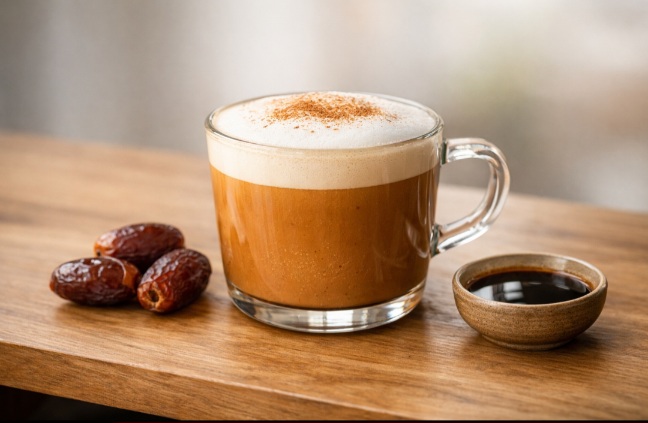
The barista pulls a fresh espresso shot, folds a spoonful of date syrup into the cup, and finishes with softly steamed milk. No flavored syrups. No sugar packets. Just a quiet adjustment to a familiar drink.
Across specialty cafés in the US and Europe, the Date Latte has begun appearing as a thoughtful alternative to traditional sweetened coffee drinks. Rather than positioning itself as a trend or a health product, it reflects a broader shift toward ingredient-aware menus and modern wellness culture—where sweetness is intentional, not excessive.
This guide covers everything you need to know about Date Lattes — from flavor and ingredients to how they compare with other naturally sweetened coffee drinks.
What Is a Date Latte?
A Simple Definition
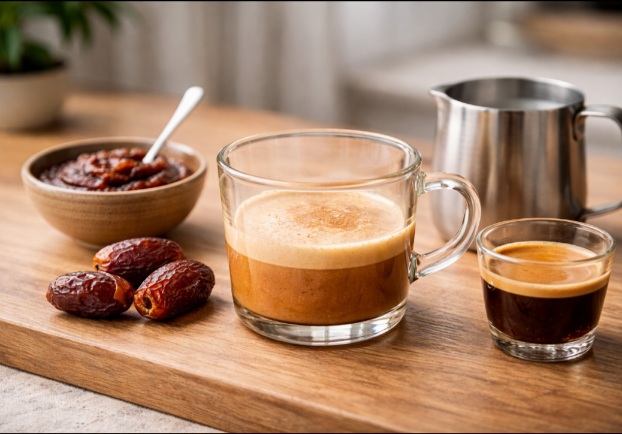
A Date Latte is a coffee drink sweetened with dates or date-based syrup instead of refined sugar or flavored syrups. It typically combines espresso, steamed milk (dairy or plant-based), and a smooth date sweetener.
The result is a latte that feels familiar yet quietly different—recognizably coffee-forward, with a softer approach to sweetness.
Core Ingredients
- Freshly brewed espresso
- Steamed milk or plant-based milk
- Date paste or house-made date syrup
- Optional spices such as cinnamon or cardamom
Cafés often adjust the sweetness level carefully, treating dates as an ingredient rather than a flavoring.
What a Date Latte Tastes Like
In plain terms, a Date Latte tastes gently sweet with subtle caramel notes. The sweetness feels rounded rather than sharp, allowing the espresso to remain present instead of being masked.
Why Date-sweetened Lattes Are Gaining Attention
Ingredient-Aware Menus
Across modern cafés, there’s growing interest in menus built around recognizable, minimal ingredients. Dates fit naturally into this approach, offering sweetness without relying on multi-ingredient syrups.
In specialty cafés, baristas often note that date syrup is easier to balance than honey or flavored syrups—especially with medium-roast espresso.
Wellness Culture Without Extremes
The appeal of this coffee option isn’t about restriction. It reflects a preference for less refined sweetness in everyday coffee routines, similar to drinks like Turmeric Latte (Golden Milk) that focus on balance over intensity, aligning with clean-label and lifestyle-conscious choices rather than dietary rules.
Global Influence on Coffee Culture
Date-sweetened drinks have long been part of Middle Eastern and Mediterranean food traditions, a history well documented in culinary references such as Wikipedia. As global café culture continues to cross borders, these influences are increasingly visible on specialty menus in cities like London, Berlin, New York, and Los Angeles.
How it Differs from a Regular Latte
Sweetness Source
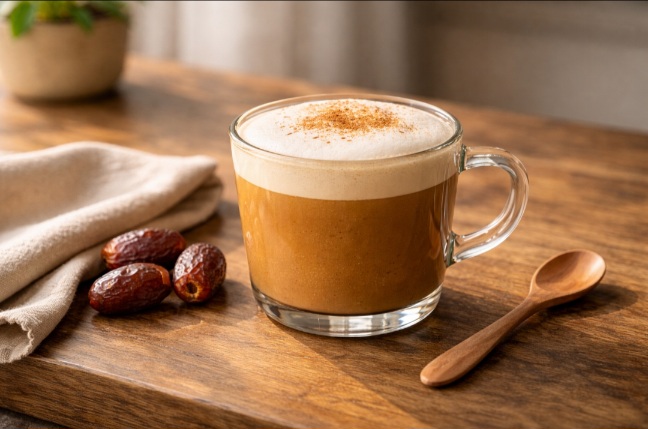
A regular latte relies on milk sugars alone or added white sugar. This version introduces sweetness from whole dates or date syrup, which changes both flavor and mouthfeel.
Overall Experience
Where sugar adds direct sweetness, dates contribute depth. The drink feels warmer, more integrated, and less linear in flavor.
Date Latte vs Other Naturally Sweetened Lattes
Date Latte vs Honey Latte
Honey lattes tend to be brighter and more floral, as explored in our Honey Lavender Latte guide. Date-sweetened Lattes are deeper and more neutral, often preferred when the goal is to preserve espresso character.
Date Latte vs Maple Latte
Maple syrup brings a distinctive, smoky sweetness. Dates offer a subtler profile that blends into coffee rather than defining it.
Side-by-Side Comparison
| Feature | Date Latte | Regular Latte | Honey / Maple Latte |
|---|---|---|---|
| Primary Sweetener | Dates or date syrup | White sugar or none | Honey or maple syrup |
| Flavor Profile | Soft, caramel-like | Neutral, milky | Floral or smoky |
| Ingredient Perception | Whole-food based | Refined or minimal | Natural but bold |
| Café Usage | Emerging staple | Classic standard | Often seasonal |
Health-Conscious Positioning (Without Medical Claims)
A Lifestyle-Oriented Choice
These drinks are often chosen by people who prefer ingredient transparency and a softer approach to sweetness. This is a lifestyle preference, not a nutritional claim.
Clean-Label Appeal
Dates are a single-ingredient sweetener. For many consumers, this simplicity supports trust in café menus and home preparation alike.
Balance Over Restriction
Rather than removing sweetness altogether, the Date Latte reframes it—keeping the drink comforting without feeling over-processed.
How Date Lattes Are Made
In Specialty Cafés
Many cafés prepare date syrup in-house, blending dates with hot water and straining for smoothness. Sweetness levels are adjusted based on the espresso profile rather than fixed recipes.
At Home
- Blended soaked dates
- Ready-made date syrup
- Dairy milk or popular plant-based milk for lattes
Home brewers often experiment to find the balance that suits their espresso and milk choice.
Who Is the Date Latte For?
Coffee Drinkers Reducing Refined Sugar
Those looking to step away from white sugar—without turning to artificial alternatives—often find this style of latte appealing.
Ingredient-Conscious Consumers
People interested in natural coffee sweeteners that integrate smoothly with espresso tend to gravitate toward date-based options.
Curious Café Explorers
Anyone following trending café drinks in the US and Europe is likely to encounter Date Lattes as menus continue to evolve.
Date Lattes in Modern Café Culture
A Year-Round Menu Option
Unlike novelty drinks, Date Lattes work across seasons. They translate well as hot or iced drinks and pair easily with both dairy and plant-based milks.
Practical for Café Operations
Dates store well, reduce reliance on multiple syrups, and align with streamlined, ingredient-focused menu design.
Frequently Asked Questions
Is Date Latte healthy?
Yes, when made with whole dates and no added sugar, a Date Latte can be a more natural alternative to syrup-based lattes. Dates provide fiber, potassium, and natural sugars, creating balanced sweetness rather than a sharp sugar spike.
Can I make a Date Latte without coffee?
Absolutely. You can prepare a caffeine-free version by blending dates with warm milk and skipping the espresso. The result is a comforting, naturally sweet drink similar to a date milk latte.
Is a Date Latte sweeter than a regular latte?
A Date Latte often tastes naturally sweeter than a traditional latte, but the sweetness is softer and more rounded. Instead of sharp sugar notes, dates create caramel-like depth that blends into the espresso.
Does a Date Latte taste like dessert?
Not necessarily. When well-balanced, it remains a coffee-forward drink. The natural sugars enhance the body and warmth without turning it into a sugary dessert beverage.
Date Latte vs Honey Latte: which preserves coffee character better?
Date Lattes integrate more gently with espresso. Honey can sometimes dominate lighter roasts, while dates provide deeper, mellow sweetness that supports rather than competes with the coffee.
Why are cafés choosing dates over flavored syrups?
Many cafés prefer dates because they allow better control over sweetness while maintaining ingredient transparency. Dates add texture and complexity without artificial aftertaste.
Where to Explore Next
- Guides to natural coffee sweeteners
- Comparisons of plant-based milk for lattes, including options like Pumpkin Latte and Pistachio Latte
- Broader looks at modern specialty café trends
-
Related Coffee Guides You May Enjoy
Final Thoughts
The rise of the this drink isn’t about novelty or restriction. It reflects how cafés and home brewers are rethinking sweetness—favoring ingredients that feel intentional rather than excessive.
For anyone curious about where modern coffee culture is heading, the Date Latte offers a quiet but telling clue.