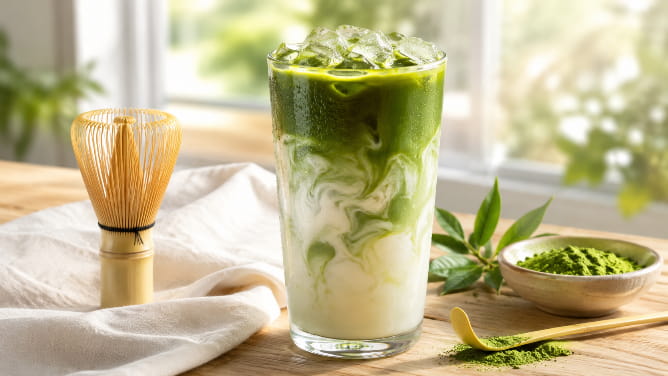
An iced matcha latte is one of the most refreshing ways to enjoy matcha, combining vibrant green tea with cold milk and ice for a smooth, creamy drink. Unlike coffee-based iced beverages, it offers a gentle, steady energy that many people appreciate throughout the day.
Whether you’re looking for a café-style drink to make at home or you’re simply curious about what makes matcha so popular, this guide covers everything you need to know. You’ll learn what an iced matcha latte is, what it tastes like, how it’s made, and why it has become a favorite among tea lovers and home baristas alike.
What Is an Iced Matcha Latte?
An iced matcha latte is a cold beverage made by whisking finely ground matcha green tea powder with water, then combining it with chilled milk and ice. The result is a creamy drink with a naturally vibrant green color, a smooth texture, and a balanced earthy flavor.
Unlike traditional brewed green tea, matcha uses the entire tea leaf in powdered form. Because the whole leaf is consumed, matcha delivers a richer flavor and a more concentrated source of naturally occurring antioxidants and caffeine.
One of the reasons this drink has become so popular is its versatility. It can be prepared with dairy milk or plant-based alternatives such as oat, almond, soy, or coconut milk. Sweeteners like honey, maple syrup, vanilla syrup, or simple syrup can also be added to suit different tastes.
Although coffee shops often serve iced matcha lattes with flavored syrups, making one at home gives you complete control over the sweetness, milk choice, and overall flavor.
Why Is an Iced Matcha Latte So Popular?
Over the past few years, iced matcha lattes have become a staple on café menus around the world. Their popularity isn’t just about their eye-catching green color—it’s also about the unique experience they offer.
Many people enjoy iced matcha because it provides a smoother energy boost than traditional coffee. Matcha naturally contains caffeine along with L-theanine, an amino acid that may help promote a calm, focused feeling. For many tea lovers, this combination creates a more balanced drinking experience.
Another reason for its popularity is how customizable it is. You can easily adapt the recipe to suit your preferences by changing the milk, adjusting the sweetness, or adding flavors like vanilla, lavender, strawberry, or honey.
It’s also a drink that fits many occasions. An iced matcha latte can be a refreshing morning beverage, a light afternoon pick-me-up, or a cooling treat on a warm summer day.
What Does an Iced Matcha Latte Taste Like?
If you’ve never tried matcha before, its flavor may surprise you.
An iced matcha latte has a naturally earthy, slightly grassy taste with subtle vegetal notes that reflect its Japanese green tea origins. High-quality ceremonial matcha often has a gentle natural sweetness and a smooth finish, while culinary-grade matcha tends to be more robust and slightly bitter.
Adding milk softens matcha’s bold character, creating a creamy, mellow drink that’s approachable even for beginners. The sweetness of your chosen milk or sweetener can further balance the earthy flavor, making each sip smooth and refreshing.
Texture also plays an important role. A well-made iced matcha latte feels silky rather than watery, with a light creaminess that complements the fresh taste of the tea.
Because the drink is served over ice, the flavors remain crisp and refreshing, making it especially enjoyable during warmer months.
Why You’ll Love Making It at Home
Beyond saving money, making an iced matcha latte at home lets you customize every element of the drink—from the matcha and milk to the sweetness and flavor—to suit your personal taste.
You’ll be able to:
- Choose the quality of your matcha powder.
- Control the sweetness to match your taste.
- Pick your favorite type of milk.
- Save money compared to buying café drinks regularly.
- Experiment with seasonal flavors and creative variations.
Once you learn the basic technique, it’s easy to customize your drink and create your own signature iced matcha latte.
Ingredients You’ll Need
One of the best things about making an iced matcha latte at home is that it requires just a handful of simple ingredients. Choosing high-quality ingredients, however, can make a noticeable difference in both flavor and texture.
Although the ingredient list is short, each component plays an important role in creating a smooth, balanced drink.
Choosing the Best Matcha Powder
Not all matcha is created equal. The type of matcha you choose has the biggest impact on the taste, color, and overall quality of your iced latte.
Ceremonial Grade Matcha
Ceremonial grade matcha is made from the youngest tea leaves and is carefully processed to preserve its vibrant green color and naturally smooth flavor.
It’s an excellent choice if you enjoy drinking matcha with minimal sweetener and want a cleaner, more delicate taste.
Culinary Grade Matcha
Culinary grade matcha has a stronger, slightly bolder flavor that stands up well to milk, sweeteners, and flavored syrups.
Many people prefer it for homemade lattes because it’s more affordable while still producing a delicious drink.
What to Look For
When shopping for matcha, look for:
- A bright, vibrant green color
- A fine, silky powder
- A fresh, grassy aroma
- Packaging that protects the powder from light and air
Avoid matcha that appears dull, yellowish, or overly brown, as it may taste bitter or stale.
Choosing the Right Milk
The milk you choose can completely change the character of your iced matcha latte. Some options create a rich, creamy texture, while others allow the natural flavor of matcha to shine.
Whole Milk
Whole milk creates a smooth, creamy drink with a rich mouthfeel that many café-style lattes are known for.
Oat Milk
Oat milk has become one of the most popular choices for matcha lattes because of its naturally creamy texture and mild sweetness. It blends beautifully with matcha without overpowering its delicate flavor.
Almond Milk
Almond milk is lighter and has a subtle nutty flavor. It’s a good option if you’re looking for a lower-calorie drink, although it may produce a slightly thinner texture.
Soy Milk
Soy milk offers a creamy consistency and a neutral flavor that pairs well with matcha. It’s also a popular plant-based choice thanks to its higher protein content.
Coconut Milk
For a tropical twist, coconut milk adds richness and a subtle coconut aroma that complements matcha surprisingly well.
Ultimately, the best milk is the one that matches your personal taste and dietary preferences.
Should You Sweeten an Iced Matcha Latte?
This is one of the most common questions beginners ask.
High-quality matcha has a pleasant natural sweetness, so you may find that little or no additional sweetener is needed. If you’re new to matcha, however, adding a small amount of sweetener can help balance its earthy notes.
Popular choices include:
- Honey
- Maple syrup
- Simple syrup
- Vanilla syrup
- Agave syrup
Start with a small amount, taste the drink, and adjust gradually. It’s much easier to add more sweetness than to remove it.
Equipment You’ll Need
You don’t need professional café equipment to make an excellent iced matcha latte. A few basic tools are enough to achieve smooth, lump-free results.
Helpful equipment includes:
- A bamboo matcha whisk (chasen)
- A small matcha bowl
- A fine mesh sieve
- A measuring spoon
- A tall serving glass
- A handheld milk frother (optional)
- A cocktail shaker with a lid (optional)
If you don’t own a traditional bamboo whisk, a handheld milk frother or even a tightly sealed jar can work well for mixing matcha until it’s smooth.
Expert Tip
One of the easiest ways to improve your homemade iced matcha latte is to sift the matcha powder before whisking it. This simple step helps prevent clumps, making the drink smoother, creamier, and more enjoyable from the very first sip.

How to Make an Iced Matcha Latte at Home
Making a café-quality iced matcha latte at home is easier than you might think. The secret lies in using good-quality matcha, whisking it properly, and balancing the flavors to suit your taste.
Ingredients
- 1–2 teaspoons ceremonial or culinary grade matcha powder
- 2 ounces (60 ml) hot water (about 175°F / 80°C)
- 1 cup (240 ml) cold milk of your choice
- Ice cubes
- Sweetener, if desired
Step 1: Sift the Matcha
Place the matcha powder through a fine mesh sieve into a small bowl.
Although it may seem like a small detail, sifting helps remove tiny clumps and makes the powder much easier to whisk into a smooth, lump-free mixture.
Step 2: Add Warm Water
Pour the warm water over the sifted matcha.
Avoid using boiling water, as excessive heat can make matcha taste more bitter and diminish its delicate flavor.
Step 3: Whisk Until Smooth
Using a bamboo whisk (chasen), whisk the matcha in a quick zigzag “W” or “M” motion until it becomes smooth and lightly frothy.
If you don’t have a bamboo whisk, a handheld milk frother or a tightly sealed jar can also produce good results.

Step 4: Fill Your Glass with Ice
Fill a tall serving glass about three-quarters full with ice cubes.
Fresh ice keeps the drink crisp while preventing the matcha from becoming diluted too quickly.
Step 5: Pour in the Milk
Slowly add the cold milk over the ice.
For a layered café-style presentation, pour the milk first and then gently add the prepared matcha on top.
Step 6: Add the Matcha
Carefully pour the whisked matcha over the milk.
You’ll notice beautiful green and white layers before stirring—one of the signature visual features of an iced matcha latte.
Step 7: Stir and Enjoy
Stir everything together until fully combined.
Taste your latte and add more sweetener if desired before serving immediately.
Pro Tips for Café-Quality Results
Small details can make a noticeable difference in the final drink.
Keep these professional tips in mind:
- Use fresh, high-quality matcha for the brightest flavor and color.
- Store matcha in an airtight container away from heat and light.
- Always sift the powder before whisking.
- Use filtered water whenever possible.
- Chill your milk before preparing the drink.
- Adjust the amount of matcha depending on how bold you like the flavor.
- Add sweetener gradually rather than all at once.
- Stir just before drinking if the matcha begins to settle.
These simple techniques can elevate a homemade iced matcha latte from good to café-worthy.
🌿 MyHomeDrinks Tip
For the smoothest, brightest iced matcha latte, always sift your matcha powder before whisking and use cold, freshly chilled milk. These two simple steps can dramatically improve both the texture and the vibrant green color of your drink.
Common Mistakes to Avoid
Even though this drink is simple to prepare, a few common mistakes can affect the flavor and texture.
Using Boiling Water
Boiling water can make matcha taste harsh and overly bitter.
Warm—not boiling—water helps preserve its naturally smooth flavor.
Skipping the Sifting Step
Unsifted matcha often forms stubborn clumps that are difficult to dissolve.
Taking a few extra seconds to sift the powder creates a much smoother drink.
Choosing Low-Quality Matcha
Using stale or improperly stored matcha can result in a dull color and a flat, bitter flavor—even if it was originally high quality.
Whenever possible, choose fresh matcha from a reputable producer.
Adding Too Much Sweetener
The goal is to complement the natural flavor of matcha—not hide it.
Start with a small amount and adjust according to your preference.
Not Mixing Thoroughly
If the matcha isn’t whisked properly, it may settle at the bottom of the glass or leave an uneven texture.
A smooth mixture creates a more enjoyable drinking experience from the first sip to the last.

Delicious Flavor Variations
One of the reasons iced matcha lattes remain so popular is how easy they are to customize.
Here are a few delicious variations to try:
Vanilla Iced Matcha Latte
Add a splash of vanilla syrup or a few drops of pure vanilla extract for a smooth, lightly sweet flavor.
Honey Matcha Latte
Honey brings gentle floral notes that pair beautifully with matcha’s earthy character.
Strawberry Matcha Latte
Layer homemade strawberry purée beneath the milk before adding the matcha for a colorful drink with a naturally fruity twist.
Coconut Matcha Latte
Use chilled coconut milk for a creamy, tropical variation that’s especially refreshing in warm weather.
Lavender Matcha Latte
A small amount of lavender syrup adds delicate floral notes without overpowering the matcha.
Brown Sugar Matcha Latte
Brown sugar syrup introduces subtle caramel-like sweetness, creating a richer flavor profile that’s perfect for those who enjoy dessert-inspired drinks.
If you enjoy warm, spiced café drinks, you might also love a Dirty Chai Latte.
If you’re curious about the classic version, learn more in our guide to What Is a Chai Latte.
If you’re curious about the classic version, learn more in our guide to What Is a Chai Latte.
How Much Caffeine Is in an Iced Matcha Latte?
One of the most common questions about matcha is how much caffeine it contains. The answer depends on the amount of matcha powder used and the specific brand, but a typical homemade iced matcha latte made with 1 to 2 teaspoons of matcha generally contains about 60 to 140 mg of caffeine.
For comparison:
- A cup of brewed green tea usually contains less caffeine than matcha.
- A standard cup of drip coffee often contains around 95 mg of caffeine, although this can vary.
- Espresso has a higher concentration of caffeine per ounce, but a single shot typically contains about 63 mg.
Unlike coffee, matcha naturally contains L-theanine, an amino acid that may promote a calmer, more focused feeling. Many people describe the energy from matcha as smoother and more gradual, without the sudden spike or crash they sometimes experience with coffee.
If you’re sensitive to caffeine, consider using less matcha powder or enjoying your iced matcha latte earlier in the day.
Nutrition Overview
The exact nutritional value of an iced matcha latte depends on the ingredients you choose, particularly the type of milk and whether you add sweeteners.
In general, a homemade iced matcha latte can provide:
- Naturally occurring antioxidants from matcha
- Small amounts of vitamins and minerals
- Protein and calcium (when made with dairy or fortified plant-based milk)
- A moderate amount of caffeine
- Calories that vary based on the milk and sweetener used
Choosing unsweetened milk and limiting added syrups can help keep the drink lighter while allowing the natural flavor of matcha to shine.
Potential Health Benefits
Matcha has been enjoyed in Japan for centuries and is often appreciated as part of a balanced lifestyle. While research continues to explore its potential benefits, it’s important to view matcha as one element of an overall healthy diet—not as a cure or treatment.
An iced matcha latte may:
- Provide naturally occurring antioxidants found in green tea.
- Offer a source of caffeine for increased alertness.
- Support focus thanks to the combination of caffeine and L-theanine.
- Be a satisfying alternative to sugary coffee drinks when prepared with less added sugar.
- Encourage hydration as part of your daily beverage routine.
The overall nutritional quality of your drink will depend on the ingredients you choose, including the milk and any sweeteners you add.
Iced Matcha Latte vs. Hot Matcha Latte
Both drinks use the same key ingredient—matcha powder—but they offer different experiences.
Iced Matcha Latte
- Refreshing and cooling
- Perfect for warm weather
- Crisp, light, and smooth
- Often served over ice
- Great as an afternoon pick-me-up
Hot Matcha Latte
- Warm and comforting
- Ideal for cooler seasons
- Rich, creamy texture
- Pairs well with cozy breakfasts or quiet mornings
- Offers a soothing drinking experience
Neither version is better than the other. The choice simply depends on your mood, the season, and your personal preference.
Iced Matcha Latte vs. Matcha Frappé
Although these drinks may look similar, they’re quite different.
Iced Matcha Latte
- Made with matcha, milk, water, and ice
- Smooth and refreshing
- Light texture
- Easy to prepare at home
Matcha Frappé
- Blended with ice for a thicker consistency
- Often includes whipped cream or flavored syrups
- Sweeter and more dessert-like
- Similar to frozen café beverages
If you’re looking for a lighter everyday drink, an iced matcha latte is an excellent choice. If you’re craving something richer and more indulgent, a matcha frappé may be the better option.
Is an Iced Matcha Latte Right for You?
An iced matcha latte is a versatile drink that appeals to many different people.
You might enjoy it if you:
- Love green tea and its distinctive flavor.
- Want a refreshing alternative to iced coffee.
- Prefer a customizable drink with different milk and sweetener options.
- Enjoy making café-style beverages at home.
- Appreciate a balanced combination of creamy texture and earthy flavor.
Whether you’re completely new to matcha or already a dedicated fan, an iced matcha latte is an easy and enjoyable drink to personalize.
What to Serve with an Iced Matcha Latte
An iced matcha latte pairs beautifully with a variety of light breakfasts, pastries, and snacks. Its earthy flavor and creamy texture complement both sweet and savory foods without overpowering them.
Some delicious pairings include:
- Butter croissants
- Blueberry muffins
- Lemon loaf cake
- Banana bread
- Shortbread cookies
- Avocado toast
- Yogurt with fresh berries
- Overnight oats
- Matcha-flavored desserts
Whether you’re enjoying a quiet morning or an afternoon break, these pairings can turn a simple drink into a satisfying café-style experience at home.
Can You Make It Ahead of Time?
An iced matcha latte is best enjoyed fresh, as freshly whisked matcha has the brightest flavor and smoothest texture.
If you want to save time, you can prepare the matcha mixture a few hours in advance and keep it refrigerated in a sealed container. When you’re ready to serve, simply shake or stir it well before pouring it over fresh ice and cold milk.
Avoid storing a fully assembled iced matcha latte with ice, as the melting ice will gradually dilute the drink and affect its flavor.
Frequently Asked Questions
Can I make an iced matcha latte without a bamboo whisk?
Yes. While a traditional bamboo whisk creates the smoothest texture, a handheld milk frother, small kitchen whisk, or even a tightly sealed jar can also mix matcha effectively.
Is an iced matcha latte sweeter than regular matcha?
Not necessarily. The sweetness depends entirely on the ingredients you use. Many homemade versions contain little or no added sweetener, allowing the natural flavor of matcha to stand out.
What’s the best milk for an iced matcha latte?
Oat milk is a popular choice because of its creamy texture and mild sweetness. Whole milk, soy milk, almond milk, and coconut milk also work well, depending on your taste preferences.
Can I use culinary grade matcha?
Absolutely. Culinary grade matcha is commonly used for lattes and blended drinks because its bold flavor pairs well with milk and sweeteners.
Why does my matcha taste bitter?
Bitterness is often caused by using low-quality matcha, boiling water, or adding too much powder. Choosing fresh matcha and whisking it with warm—not boiling—water can help create a smoother flavor.
Final Thoughts
An iced matcha latte is more than just a colorful café favorite—it’s a refreshing, customizable drink that’s surprisingly easy to make at home. With just a few simple ingredients and the right technique, you can create a smooth, creamy beverage that rivals your favorite coffee shop version.
Whether you prefer it lightly sweetened, dairy-free, or flavored with vanilla or honey, this versatile drink offers endless opportunities to experiment and discover your perfect combination.
Once you’ve mastered the basics, you’ll find yourself reaching for matcha whenever you’re craving a cool, satisfying drink with a vibrant flavor and a gentle energy boost.