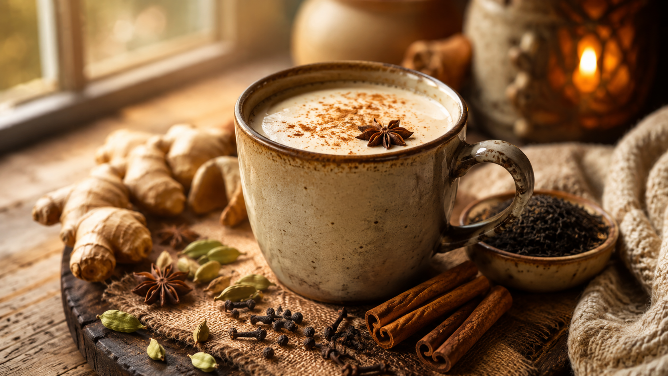
If you’ve ever stepped into a cozy coffee shop on a chilly morning, chances are you’ve spotted a Chai Latte on the menu. With its comforting aroma, creamy texture, and blend of warming spices, this drink has become a favorite for people looking for something different from a traditional coffee.
But what exactly is a Chai Latte? Is it simply tea with milk, or is there more to it? And how does it compare to the classic Indian drink known as Masala Chai?
Whether you’re curious about making a homemade Chai Latte, choosing the right spices, or deciding between a hot or iced version, this guide will walk you through everything you need to know. By the end, you’ll understand why this flavorful drink has earned a permanent place in cafés and home kitchens around the world.
What Is a Chai Latte?
A Chai Latte is a creamy tea-based drink made by combining strongly brewed black tea with steamed milk and a fragrant blend of spices. Unlike a traditional coffee latte, which uses espresso as its base, a Chai Latte gets its rich flavor from spiced tea instead of coffee.
The word chai simply means tea in Hindi. In India, the traditional version is known as Masala Chai, which translates to “spiced tea.” It is typically brewed by simmering black tea with milk, water, sugar, and aromatic spices.
The café-style Chai Latte that has become popular worldwide is inspired by this traditional drink but is usually prepared differently. Many coffee shops use a pre-made chai concentrate or powdered chai mix, then combine it with steamed milk to create a smooth, creamy beverage.
For coffee lovers looking for a bolder twist, a Dirty Chai Latte adds one or more shots of espresso to a traditional Chai Latte while preserving its signature warm spice flavors.
The result is a drink that feels comforting and indulgent while still offering the gentle boost of caffeine from black tea. It’s a popular choice for anyone who enjoys warm spices but prefers something milder than coffee.
If you’re new to milk-based drinks, you may also enjoy learning What Is a Latte, where you’ll discover how different latte varieties compare.
What Does Chai Latte Taste Like?
One of the reasons Chai Latte has become so popular is its balanced and comforting flavor.
Instead of the bold bitterness associated with coffee, a Chai Latte offers layers of sweetness, spice, and creaminess. Every sip combines the richness of milk with the aromatic character of black tea and carefully selected spices.
Depending on the recipe, you may notice flavors such as:
- Sweet cinnamon
- Bright cardamom
- Warm ginger
- Earthy cloves
- Mild black pepper
A hint of vanilla in some café versions
The milk softens the spices, creating a velvety drink that feels smooth rather than overpowering.
A homemade Chai Latte often has a fresher and more vibrant spice profile because the ingredients are brewed directly into the tea. Café versions, on the other hand, are usually sweeter and creamier, making them approachable even for people who don’t normally drink tea.
If you enjoy beverages with warming flavors, you might also appreciate a Turmeric Latte (Golden Milk), another comforting drink that highlights aromatic spices in a creamy base.
What Is Chai Made From?
Traditional chai begins with a handful of simple ingredients, but it’s the combination of those ingredients that creates its distinctive flavor.
Most Chai Latte recipes include:
Black Tea
Strong black tea forms the foundation of the drink. Assam tea is especially popular because its bold flavor stands up well to milk and spices. Other black teas, such as Darjeeling or Ceylon, can also be used depending on the desired taste.
Milk
Milk gives a Chai Latte its signature creamy texture. Whole milk creates the richest result, while oat, almond, soy, or coconut milk provide delicious dairy-free alternatives with their own unique flavors.
Sweetener
Sugar is traditional, but many people prefer honey, maple syrup, or other sweeteners depending on their taste.
Chai Spices
The spice blend is what makes chai truly memorable. Common spices include:
- Cinnamon
- Cardamom
- Fresh ginger
- Cloves
- Black pepper
- Star anise (optional)
- Nutmeg (optional)
- Fennel seeds (optional)
Each family and café often has its own spice combination, so no two Chai Lattes taste exactly alike.
The spices are gently simmered with the tea to extract their natural oils, filling the kitchen with an inviting aroma long before the first sip.

Chai Latte at a Glance
Here’s a quick overview of what makes a Chai Latte unique:
- Origin: Inspired by traditional Indian Masala Chai
- Main ingredients: Black tea, milk, water, sweetener, and warming spices
- Flavor: Creamy, sweet, spicy, and aromatic
- Texture: Smooth and velvety
- Caffeine: Moderate, usually less than a typical cup of coffee
- Best serving style: Hot during cooler months or iced for warm weather
- Difficulty: Beginner-friendly
- Sweetness level: Adjustable to personal preference
Traditional Masala Chai vs Chai Latte
Although the names are often used interchangeably, Traditional Masala Chai and a café-style Chai Latte are not exactly the same drink.
Traditional Masala Chai has been enjoyed in India for generations. It is typically prepared from scratch by simmering black tea, water, milk, sugar, and freshly crushed spices together. The brewing process allows the spices to fully infuse the tea, producing a bold and complex flavor.
A Chai Latte, on the other hand, is a modern café adaptation inspired by Masala Chai. Many coffee shops prepare it using a ready-made chai concentrate or powdered chai mix combined with steamed milk. This method is faster and creates a smoother, creamier drink, although it may not capture the same depth of spice as a homemade version.
Here are the main differences:
- Masala Chai is traditionally simmered on the stovetop.
- Chai Latte is often prepared with steamed milk like a coffee latte.
- Traditional recipes usually feature a stronger spice profile.
- Café-style Chai Lattes tend to be sweeter and creamier.
- Homemade Masala Chai offers greater control over the spice blend and sweetness.
Neither version is necessarily better—the right choice depends on your taste. If you enjoy authentic spice-forward tea, Masala Chai is a wonderful option. If you prefer a smooth, creamy drink with balanced sweetness, a Chai Latte may become your new favorite.
Benefits of Chai Latte
A Chai Latte is often chosen for its comforting flavor, but it may also offer some benefits thanks to its combination of black tea and aromatic spices. While it shouldn’t be viewed as a health drink or a replacement for a balanced diet, it can be an enjoyable addition to a healthy lifestyle.
Here are some of the potential benefits:
Provides Gentle Caffeine
Black tea naturally contains caffeine, giving you a mild energy boost without the intensity that many people experience from coffee. This makes a Chai Latte a pleasant option for an afternoon pick-me-up or a slower start to the morning.
Rich in Plant Compounds
Black tea contains naturally occurring antioxidants called polyphenols. These compounds have been widely studied for their role in supporting overall health as part of a balanced diet.
Warming Spices Add More Than Flavor
Traditional chai spices are valued not only for their taste but also for their long history in culinary traditions.
Some commonly used spices may offer benefits such as:
- Ginger may help support comfortable digestion.
- Cinnamon contributes a naturally sweet, warming flavor.
- Cardamom adds a fresh, aromatic note.
- Cloves contain naturally occurring antioxidant compounds.
- Black pepper enhances the overall depth of flavor.
While these ingredients have been associated with various wellness benefits, it’s important to remember that a Chai Latte is primarily a delicious beverage—not a medical treatment.
A Comforting Alternative to Coffee
For people who enjoy warm drinks but find coffee too strong or acidic, a Chai Latte can be an excellent alternative. The creamy milk softens the boldness of black tea, creating a drink that feels both satisfying and relaxing.
Easy to Customize
One of the biggest advantages of making a Homemade Chai Latte is how easily you can tailor it to your preferences.
You can:
- Adjust the sweetness.
- Increase or reduce the spice level.
- Choose dairy or plant-based milk.
- Use less sugar or natural sweeteners.
- Create your own signature spice blend.
That flexibility makes it a favorite among home baristas and tea lovers alike.
If you’d like to learn more about the nutritional properties of tea, the Harvard T.H. Chan School of Public Health offers an evidence-based guide that explains how tea can fit into a balanced diet.
How to Make Chai Latte at Home
Making a Homemade Chai Latte is easier than many people expect. You don’t need expensive equipment—just a saucepan, a few pantry spices, and your favorite milk.
Ingredients
You’ll need:
- 1 cup water
- 1 cup milk (dairy or plant-based)
- 2 teaspoons loose black tea or 2 black tea bags
- 1 cinnamon stick
- 3–4 cardamom pods, lightly crushed
- 2–3 slices fresh ginger
- 2 whole cloves
- A pinch of black pepper
- 1–2 teaspoons honey, sugar, or maple syrup (optional)
Step 1: Simmer the Spices
Add the water, cinnamon, cardamom, ginger, cloves, and black pepper to a small saucepan.
Bring the mixture to a gentle simmer and let it cook for about 5 minutes. This allows the spices to release their full aroma and flavor.
Step 2: Brew the Tea
Add the black tea to the spiced water.
Let it steep for 3 to 5 minutes, depending on how strong you prefer your tea.
Avoid brewing it for too long, as black tea can become overly bitter.
Step 3: Add the Milk
Pour in the milk and heat gently until steaming.
Do not let the mixture boil vigorously, as overheating can affect both the flavor and texture of the milk.
Step 4: Sweeten to Taste
Add your preferred sweetener and stir until fully dissolved.
Taste the drink before adding more—you can always increase the sweetness later.
Step 5: Strain and Serve
Pour the Chai Latte through a fine strainer into your favorite mug.
For an extra café-style touch, top it with lightly frothed milk and a light sprinkle of ground cinnamon.
Serve immediately while warm.

Want an Even Quicker Version?
If you’re short on time, you can also make a delicious Chai Latte using a quality store-bought chai concentrate.
Simply:
- Heat equal parts chai concentrate and milk.
- Froth the milk if desired.
- Pour into a mug.
- Sprinkle with cinnamon or nutmeg.
This shortcut won’t have quite the same depth of flavor as brewing fresh spices, but it’s a convenient option for busy mornings.
Customize Your Chai Latte
One of the joys of making Chai Latte at home is experimenting with different flavors.
Try these ideas:
- Use oat milk for extra creaminess.
- Add vanilla extract for a sweeter aroma.
- Replace sugar with honey or maple syrup.
- Add extra ginger for a spicier kick.
- Include star anise for a deeper licorice-like note.
- Sprinkle cinnamon on top before serving.
- Froth the milk for a coffeehouse-style finish.
Small adjustments can completely change the character of your drink, making every cup uniquely yours.
In fact, if you enjoy experimenting with homemade beverages, you may also like trying a Matcha Latte, a naturally vibrant green tea drink with a smooth, earthy flavor, or a naturally sweet Date Latte for a caffeine-free treat.
Can You Make a Chai Latte Without a Frother?
Absolutely. While a milk frother creates the easiest café-style foam, it’s not the only option. You can still make a creamy Chai Latte at home using simple kitchen tools.
Here are a few easy alternatives:
- Whisk: Heat the milk and whisk it vigorously for about a minute until it becomes light and foamy.
- Jar Method: Pour warm milk into a heat-safe jar, seal the lid tightly, and shake for 30–60 seconds before pouring.
- French Press: Pump the plunger up and down several times to create a thick, velvety foam in less than a minute.
No matter which method you choose, gently heated milk works better than boiling milk and produces a smoother texture.
Best Milk for a Chai Latte
The type of milk you choose can make a noticeable difference in the flavor and texture of your Chai Latte. While there isn’t a single “best” option, each type of milk creates a unique drinking experience.
Whole milk is the classic choice for a rich, creamy Chai Latte. Its natural sweetness balances the warming spices, making it the closest match to what you’ll find in many coffee shops.
Oat milk has become a favorite for homemade Chai Lattes thanks to its smooth texture and mild flavor. It froths well and pairs beautifully with spices like cinnamon, ginger, and cardamom.
Almond milk creates a lighter drink with a subtle nutty taste. It’s a good option if you prefer a less creamy beverage or want a dairy-free alternative.
Soy milk offers a creamy consistency and slightly earthy flavor while providing more protein than many other plant-based milks. It also produces stable foam, making it a great choice for latte-style drinks.
No matter which milk you choose, adjusting the sweetness and spice level to your personal taste is the best way to create your perfect Homemade Chai Latte.
The type of milk you choose can noticeably change the flavor and texture of your Chai Latte. Traditional recipes often use whole milk because its natural richness balances the bold spices and black tea. It creates a creamy texture that feels very similar to what you’d enjoy in a café.
If you prefer a dairy-free option, oat milk is one of the best choices. Its naturally sweet flavor pairs beautifully with cinnamon, cardamom, and ginger while producing a smooth, creamy drink.
Almond milk offers a lighter body with a subtle nutty taste that complements the spices without overpowering them. It works especially well for iced Chai Lattes.
Soy milk has a higher protein content than many plant-based alternatives, allowing it to froth well and create a creamy consistency. Its mild flavor also blends nicely with chai spices.
Ultimately, the best milk comes down to personal preference. Experimenting with different options is part of the fun and allows you to create a Chai Latte that perfectly matches your taste.
🌿 MyHomeDrinks Tip
For the richest flavor, let your spices simmer gently instead of boiling them rapidly. A slow infusion helps cinnamon, cardamom, ginger, and cloves release their natural aromas, creating a smoother and more balanced Chai Latte.
Common Mistakes to Avoid
Even a simple Chai Latte can turn out disappointing if a few key steps are overlooked. Fortunately, these common mistakes are easy to avoid.
Over-Brewing the Tea
Leaving black tea in the water for too long can create an unpleasant bitterness that overpowers the spices. For most black teas, a brewing time of 3 to 5 minutes is enough.
Using Too Much Sweetener
Many café-style Chai Lattes are quite sweet, but homemade versions don’t have to be. Start with a small amount of honey, sugar, or maple syrup, then adjust after tasting.
Burning the Milk
Milk should be heated until it’s steaming—not boiling. Overheated milk can develop a cooked flavor and lose its smooth, creamy texture.
Skipping Fresh Spices
Ground spices are convenient, but whole spices often produce a brighter, more balanced flavor. If possible, lightly crush whole cardamom pods or use fresh ginger for a more aromatic cup.
Using the Wrong Milk-to-Tea Ratio
Too much milk can make the drink taste flat, while too little can leave the spices feeling overly intense. A roughly equal ratio of tea and milk creates a well-balanced Chai Latte for most people.
Forgetting to Strain the Tea
Whole spices and loose tea leaves should always be strained before serving. This simple step gives your Chai Latte a silky, café-style finish.
Hot vs Iced Chai Latte
One of the best things about a Chai Latte is that it’s delicious year-round. Whether you enjoy it hot or cold depends on the season—and your mood.
Hot Chai Latte
A Hot Chai Latte is the classic choice. The warm milk enhances the spices, creating a rich and comforting drink that’s especially satisfying on cool mornings or rainy afternoons.
It’s a great option if you want:
- A cozy drink during fall and winter
- A relaxing afternoon break
- A comforting alternative to coffee
Iced Chai Latte
An Iced Chai Latte offers the same familiar spice blend with a lighter, more refreshing feel.
To make one, let your brewed chai cool completely before pouring it over ice with cold milk. For the smoothest flavor, avoid pouring hot tea directly onto ice, as this can dilute the drink too quickly.
An iced version is perfect for:
- Warm spring and summer days
- A refreshing afternoon beverage
- People who enjoy cold coffeehouse drinks
Neither version is better—the choice simply depends on the experience you’re looking for. Many chai lovers enjoy both throughout the year.

Frequently Asked Questions
Does a Chai Latte contain coffee?
No. A traditional Chai Latte is made with black tea, milk, spices, and a sweetener. It does not contain espresso or brewed coffee unless a café offers a special “Dirty Chai,” which includes a shot of espresso.
Is Chai Latte caffeinated?
Yes. Since it’s made with black tea, a Chai Latte naturally contains caffeine. However, it usually has less caffeine than a typical cup of brewed coffee, making it a gentler option for many people.
Is Chai Latte sweet?
It can be, but the sweetness is completely adjustable. Homemade recipes let you control exactly how much sugar, honey, or maple syrup you add.
Can I make a dairy-free Chai Latte?
Absolutely. Oat milk, almond milk, soy milk, and coconut milk all work well. Oat milk is especially popular because of its naturally creamy texture.
What’s the difference between Chai Tea and Chai Latte?
Traditional chai is brewed tea with spices, and it may or may not include milk depending on the recipe. A Chai Latte is typically creamier, using a higher proportion of milk and often steamed milk for a smooth coffeehouse-style texture.
Can I use tea bags instead of loose tea?
Yes. Good-quality black tea bags are a convenient option and still produce excellent results, especially when paired with fresh spices.
Is Chai Latte healthy?
A Chai Latte can be part of a balanced lifestyle. Black tea provides naturally occurring antioxidants, while spices such as ginger, cinnamon, and cardamom contribute flavor and have a long history of culinary use. Choosing less sweetener and your preferred milk can make it better suited to your personal preferences.
Can I Make Chai Latte Without Sugar?
Yes. Chai Latte can be enjoyed with little or no added sugar. If you prefer a naturally sweet flavor, try adding a small amount of honey or pure maple syrup instead of refined sugar. You can also leave out sweeteners altogether and let the warm spices and black tea shine on their own. Adjusting the sweetness to your personal taste is one of the easiest ways to make a homemade Chai Latte your own.

Final Thoughts
A Chai Latte is more than just a popular café drink—it’s a comforting blend of black tea, creamy milk, and aromatic spices that brings warmth to every cup. Whether you enjoy a traditional homemade recipe or a quick café-style version, it’s a versatile beverage that’s easy to customize to your own taste.
One of the best things about making a Homemade Chai Latte is the freedom to experiment. You can adjust the spice blend, choose your favorite milk, and find the perfect level of sweetness until every cup feels just right.
If you’ve enjoyed learning about Chai Latte, you might also like exploring some of our other favorite drinks. Discover What Is a Latte to learn the basics of this classic beverage, compare Latte vs Cappuccino to understand their key differences, or try something new with a vibrant Matcha Latte, a comforting Turmeric Latte (Golden Milk), or a naturally sweet Date Latte.
No matter which drink you choose next, the best cup is the one that matches your taste and makes you look forward to the next sip. Enjoy!