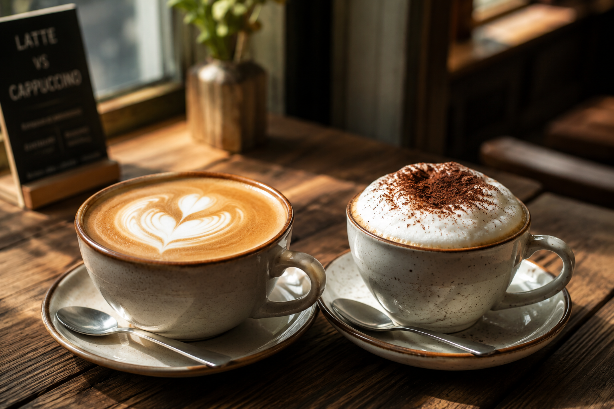
Walk into almost any coffee shop and you’ll find two drinks that consistently top the menu: the latte and the cappuccino. Both are espresso-based classics, both contain milk, and both have roots in Italian coffee culture. Yet despite their similarities, they offer remarkably different drinking experiences.
For newcomers to specialty coffee, the choice between a latte and a cappuccino can feel confusing. The drinks often look alike from a distance, and many people assume the difference comes down to cup size alone. In reality, the contrast goes much deeper.
Understanding the distinctions between milk texture, foam thickness, espresso balance, and overall flavor can help you order with confidence—or make a better cup at home.
In this guide, we’ll break down the Latte vs Cappuccino debate and explore what makes each drink unique.
Understanding the differences in the Latte vs Cappuccino debate can help you choose the drink that best matches your taste preferences.
What Is a Latte?
A latte, short for caffè latte, translates to “milk coffee” in Italian. It’s an espresso drink made with espresso and steamed milk, finished with a thin layer of microfoam on top.
Modern specialty coffee shops typically prepare a latte with:
1–2 shots of espresso
A generous amount of steamed milk
A thin layer of silky microfoam
The hallmark of a good latte is texture. The milk should be smooth, velvety, and integrated with the espresso rather than sitting separately on top.
Because milk makes up most of the drink, lattes tend to be creamy, mellow, and approachable. They’re often considered an ideal entry point for people who find straight espresso too intense.
If you’re new to this beverage, check out our guide on What Is a Latte? to learn more about its history, preparation, and variations.
What Is a Cappuccino?
The cappuccino is another espresso-and-milk classic, but its defining characteristic is foam.
Traditional cappuccinos are built around a more balanced ratio of espresso, steamed milk, and milk foam. The result is a drink with a lighter body and a stronger espresso presence.
A cappuccino typically includes:
1–2 shots of espresso
Steamed milk
A thick layer of milk foam
The foam creates a unique drinking experience. Each sip feels lighter and airier than a latte while allowing more of the espresso’s natural flavors to shine through.
According to the Specialty Coffee Association, espresso-based drinks can vary significantly in texture and flavor depending on milk preparation and beverage ratios.
In specialty coffee shops, cappuccinos may vary slightly in size and presentation, but the emphasis on foam remains the defining feature.
Latte vs Cappuccino: Key Differences
At first glance, these drinks appear nearly identical. Both begin with espresso and milk. The primary differences come from milk quantity and foam texture.
Latte
More steamed milk
Less foam
Creamier texture
Milder coffee flavor
Usually served in a larger cup
Cappuccino
Less milk
More foam
Lighter mouthfeel
Stronger espresso character
Often served in a smaller cup
The distinction becomes obvious after the first sip. A latte feels smooth and rich, while a cappuccino delivers a more pronounced coffee experience with a fluffy foam layer.
Milk, Foam, and Espresso Ratios
One of the easiest ways to understand the difference is by examining the ratios.
Typical Latte Ratio
1 part espresso
4–6 parts steamed milk
Thin microfoam layer
Typical Cappuccino Ratio
1 part espresso
1 part steamed milk
1 part milk foam
While modern cafés may adjust these proportions slightly, the overall concept remains consistent.
The larger milk content in a latte softens acidity and bitterness. In contrast, the foam-heavy structure of a cappuccino allows espresso flavors to remain more noticeable.
For coffee professionals, milk texture is just as important as quantity. A well-made latte uses finely textured microfoam that blends seamlessly into the drink. Cappuccino foam is typically thicker and more aerated.

Taste Comparison
When discussing Latte vs Cappuccino, taste is often the deciding factor for many coffee drinkers.
When people discuss Latte vs Cappuccino, taste is usually the deciding factor.
How a Latte Tastes
A latte is:
Smooth
Creamy
Mild
Slightly sweet from steamed milk
The extra milk rounds out sharp espresso notes and creates a comforting drink that’s easy to enjoy throughout the day.
Many flavored coffee drinks are based on the latte because its creamy profile pairs well with ingredients such as vanilla, caramel, cinnamon, or seasonal spices.
If you enjoy milk-based coffee drinks, you may also like our Turmeric Latte recipe.
How a Cappuccino Tastes
A cappuccino is:
More espresso-forward
Richer in coffee flavor
Lighter in body
More textured due to foam
Because there is less milk diluting the espresso, the coffee’s natural characteristics become easier to detect. Depending on the beans used, you may notice chocolate, nutty, fruity, or caramel notes more clearly.
For coffee enthusiasts who enjoy tasting the espresso itself, cappuccino often provides a better balance.
Which Drink Has More Caffeine?
This question surprises many coffee drinkers.
In most cases, a latte and a cappuccino contain approximately the same amount of caffeine.
That’s because caffeine comes from the espresso shots—not the milk.
If both drinks are made with:
One espresso shot: similar caffeine content
Two espresso shots: similar caffeine content
The difference is perception rather than reality.
A cappuccino may taste stronger because it contains less milk, but the actual caffeine level is usually identical when the same espresso dose is used.
Which Is Better for Beginners?
For most beginners, the latte is the easier choice.
The higher milk content softens espresso intensity and creates a smoother drinking experience. People transitioning from sweet coffee beverages often find lattes more approachable.
A latte may be a better option if you:
- Are new to espresso
- Prefer creamy drinks
- Enjoy flavored coffee beverages
- Want a milder coffee taste
If you enjoy creamy coffee drinks with warm spices, a Dirty Chai Latte offers a flavorful alternative by combining espresso with traditional chai tea and steamed milk.
A cappuccino may be better if you:
- Want to taste more of the espresso
- Enjoy airy milk foam
- Prefer traditional coffee flavors
- Like a lighter-feeling drink
Neither choice is objectively better. It ultimately depends on personal preference.
Latte vs Cappuccino for Home Baristas
Home espresso machines have become increasingly popular, making it easier than ever to prepare café-style drinks at home.
For beginners, lattes are generally more forgiving.
When making a latte, minor milk-texturing mistakes are often less noticeable because the drink contains more steamed milk overall.
Cappuccinos require greater control. Producing the ideal foam demands careful steaming technique and proper aeration.
Tips for Better Lattes
Use fresh whole milk for better texture.
Steam milk until silky and glossy.
Pour slowly to combine milk and espresso evenly.
Practice simple latte art patterns.
If you enjoy creative latte variations, you may also like our Date Latte recipe, which offers natural sweetness and a rich, comforting flavor.
Tips for Better Cappuccinos
Introduce slightly more air while steaming.
Aim for a thicker foam layer.
Use freshly roasted espresso beans.
Serve immediately to preserve foam texture.
If you’re experimenting with alternative coffee drinks, you may also enjoy our guide to Date Latte, a naturally sweet beverage that offers a unique twist on traditional coffee recipes.
Frequently Asked Questions
Is a latte sweeter than a cappuccino?
Naturally, yes. The larger amount of milk in a latte enhances milk sugars and creates a sweeter impression without adding sugar.
Which has more milk?
A latte contains significantly more steamed milk than a cappuccino.
Which drink is stronger?
A cappuccino generally tastes stronger because the espresso flavor is less diluted by milk.
Can I make both drinks with non-dairy milk?
Absolutely. Oat milk, soy milk, almond milk, and other alternatives can be used for both drinks, though foam quality may vary.
Which drink is better for latte art?
Lattes are typically better for latte art because their thin layer of microfoam creates a smooth surface for pouring designs.
Are cappuccinos always served in smaller cups?
Traditionally, yes. However, modern coffee shops sometimes serve larger cappuccinos while maintaining a foam-heavy milk ratio.
Final Thoughts
The Latte vs Cappuccino debate isn’t really about which drink is better—it’s about understanding what kind of coffee experience you’re looking for.
If you prefer a creamy, smooth, and milk-forward beverage, a latte is likely your best match. If you enjoy a stronger espresso presence paired with airy foam and a lighter texture, a cappuccino may become your go-to order.
Both drinks have earned their place as coffee shop staples for good reason. They’re versatile, satisfying, and capable of showcasing espresso in different ways.
Ultimately, the Latte vs Cappuccino choice comes down to personal preference and how you enjoy your coffee.
The best approach? Try both side by side. Once you experience the contrast in texture, flavor, and balance, you’ll quickly discover which one belongs in your daily coffee routine.
Pingback: Pistachio Latte Recipe: How to Make It at Home