Introduction
Looking for a café-style drink that combines the smooth, earthy flavor of matcha with the bold richness of espresso? A Dirty Matcha Latte delivers the best of both worlds. This modern café favorite blends vibrant Japanese matcha, creamy milk, and a freshly pulled shot of espresso into one beautifully balanced beverage that’s as visually striking as it is delicious.
Once considered a specialty menu item found only in artisan coffee shops, the Dirty Matcha Latte has become increasingly popular among home baristas across the United States, Canada, the United Kingdom, Australia, and New Zealand. It’s easy to see why—the drink combines the mellow, grassy notes of matcha with the deep, roasted character of espresso, creating a unique flavor profile that appeals to both tea and coffee lovers.
In recent years, Dirty Matcha Lattes have become a staple on specialty coffee shop menus thanks to their striking appearance, balanced flavor, and customizable ingredients. Whether served hot or iced, they’re a favorite among people who enjoy both coffee and matcha without having to choose between the two.
Unlike a traditional Matcha Latte, which highlights the delicate flavor of matcha alone, the “dirty” version adds freshly brewed espresso for extra depth, complexity, and a more robust coffee character. The result is a creamy latte that’s smooth enough for everyday enjoyment yet sophisticated enough to rival your favorite specialty café.
Whether you’re making your first Dirty Matcha Latte or looking to refine your technique, this guide walks you through everything—from selecting premium ingredients to mastering café-quality preparation at home.
Quick Answer
A Dirty Matcha Latte is a creamy espresso drink made with matcha green tea, milk, and one or two shots of espresso. It combines the earthy, slightly sweet flavor of matcha with the bold richness of coffee, creating a balanced beverage that’s become a favorite in specialty coffee shops around the world.
What You’ll Learn in This Guide
By the end of this guide, you’ll know how to:
- Understand what makes a Dirty Matcha Latte different from a traditional Matcha Latte.
- Choose the best matcha powder, espresso, and milk for the richest flavor.
- Make a café-quality Dirty Matcha Latte at home with step-by-step instructions.
- Customize your drink with delicious variations, including iced, vegan, and sugar-free versions.
- Avoid common mistakes that can affect flavor, texture, and appearance.
- Learn practical barista tips for consistently smooth, creamy results.
- Explore the drink’s nutrition, caffeine content, and potential benefits.
- Find the best foods to pair with your Dirty Matcha Latte for breakfast, brunch, or an afternoon coffee break.
Why You’ll Love This Guide
Unlike many recipes that simply list ingredients and instructions, this guide explains the why behind every step. You’ll learn how ingredient quality, preparation techniques, and small barista adjustments can dramatically improve your results, helping you create a Dirty Matcha Latte that looks beautiful, tastes balanced, and is easy to recreate whenever the craving strikes.
What Is a Dirty Matcha Latte?
A Dirty Matcha Latte is a modern café-style beverage that brings together two beloved drinks—Japanese matcha green tea and freshly brewed espresso—into one smooth, creamy latte. It’s typically made with whisked matcha, steamed milk (or a dairy-free alternative), and one or two shots of espresso.
The result is a beautifully balanced drink that combines the earthy, slightly sweet character of matcha with the bold, roasted richness of coffee. Although these flavors may seem unexpected together, they complement each other remarkably well, creating a latte that’s rich, layered, and easy to customize.
Unlike many flavored coffee beverages, a Dirty Matcha Latte doesn’t depend on sugary syrups for its signature taste. Instead, its appeal comes from the natural harmony of premium matcha, quality espresso, and perfectly textured milk.
Why Is It Called a “Dirty” Matcha Latte?
The word “dirty” has nothing to do with the quality of the drink. In coffee terminology, it simply means that a shot of espresso has been added to a tea-based beverage.
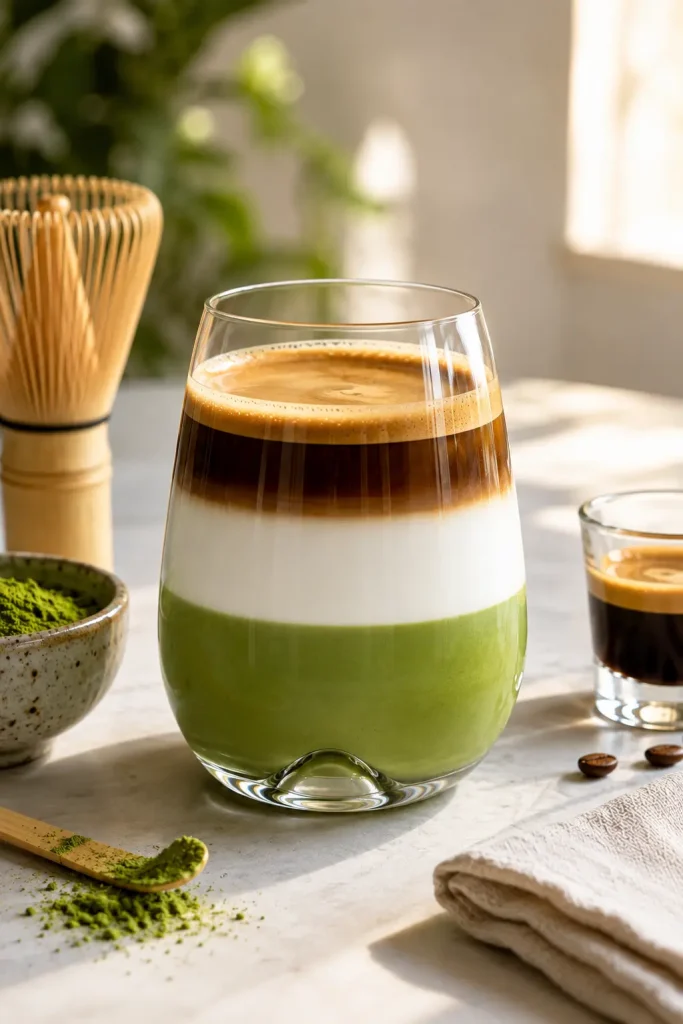
As the dark espresso is poured into the vibrant green matcha, it creates beautiful layers and swirling patterns that give the drink its distinctive appearance—and its playful name.
The same naming convention is used for other specialty café drinks, such as a Dirty Chai Latte, where espresso is added to a traditional chai latte.
What Makes It Different from a Regular Matcha Latte?
Although both drinks begin with the same matcha base, adding espresso transforms the overall experience.
A traditional Matcha Latte highlights the delicate, grassy flavor of matcha, while a Dirty Matcha Latte introduces the rich aroma, body, and complexity of freshly brewed espresso. The result is a bolder drink with a more layered flavor profile and a higher caffeine content, making it a popular choice for people who enjoy both tea and coffee.
Many people who find traditional matcha too earthy discover that espresso creates a smoother, more approachable balance without overpowering the tea.
| Feature | Matcha Latte | Dirty Matcha Latte | Why It Matters |
|---|---|---|---|
| Main Ingredients | Matcha + Milk | Matcha + Espresso + Milk | Espresso adds depth and a stronger coffee character. |
| Flavor Profile | Earthy, smooth, lightly sweet | Earthy, bold, creamy, slightly roasted | The espresso creates a richer, more complex flavor. |
| Caffeine | Moderate | Moderate to High | The Dirty Matcha Latte gets caffeine from both matcha and espresso. |
| Coffee Flavor | None | Noticeable | Espresso adds roasted coffee notes. |
| Appearance | Bright green | Green, white, and espresso layers | The espresso creates the signature layered look. |
Is a Dirty Matcha Latte Coffee or Tea?
The short answer is both.
A Dirty Matcha Latte combines two classic beverages in a single cup: matcha green tea and espresso. Rather than fitting neatly into one category, it offers the best qualities of each.
Coffee lovers appreciate the depth and richness of espresso, while matcha enthusiasts enjoy the fresh, earthy notes of premium green tea. This unique combination has helped make the Dirty Matcha Latte a favorite in specialty coffee shops and home cafés alike.
Who Will Enjoy a Dirty Matcha Latte?
A Dirty Matcha Latte is an excellent choice if you:
- Enjoy both coffee and tea.
- Want more caffeine than you might get from a traditional Matcha Latte.
- Like experimenting with café-style drinks at home.
- Prefer balanced flavors over overly sweet beverages.
- Appreciate drinks that are visually impressive and easy to customize.
Whether you enjoy it hot on a cool morning or iced on a warm afternoon, a Dirty Matcha Latte is versatile enough to suit every season and a wide range of personal tastes.

What Does a Dirty Matcha Latte Taste Like?
If you’ve never tried a Dirty Matcha Latte before, you may wonder whether matcha and espresso really belong in the same cup. Surprisingly, they do—and when prepared correctly, they create a smooth, balanced drink with remarkable depth and character.
A Dirty Matcha Latte offers a layered flavor profile. Matcha brings fresh, grassy notes with a subtle natural sweetness and gentle umami finish, while espresso contributes bold roasted flavors, light bitterness, and a rich coffee aroma. Steamed milk softens both components, creating a creamy texture that ties everything together.
Rather than competing for attention, each ingredient plays a distinct role. The result is a latte that’s bold enough to satisfy coffee lovers while remaining approachable for those who appreciate the delicate character of matcha.
Quick Answer: A Dirty Matcha Latte tastes creamy, earthy, gently roasted, and subtly sweet. Matcha provides fresh vegetal and umami notes, espresso adds depth and bold coffee flavor, and steamed milk creates a smooth, velvety finish. When made with high-quality ingredients, the flavors remain balanced, allowing neither the tea nor the coffee to overpower the other.
Flavor Breakdown
Each ingredient contributes its own unique characteristics to the finished drink.
| Ingredient | Flavor Contribution |
|---|---|
| Matcha | Earthy, grassy, lightly sweet, umami |
| Espresso | Bold, roasted, rich, slightly bitter |
| Milk | Creamy, smooth, naturally sweet |
| Optional Sweetener | Balances bitterness and enhances overall flavor |
The secret to a great Dirty Matcha Latte is harmony. Premium matcha, properly extracted espresso, and silky milk should complement one another to create a smooth, well-rounded flavor.
Does It Taste More Like Coffee or Matcha?
The answer depends on the ratio of matcha to espresso.
With a single shot of espresso, matcha remains the dominant flavor while the coffee adds richness and complexity in the background.
A double shot creates a bolder, more coffee-forward drink, making it an excellent choice for espresso enthusiasts who still want the freshness of matcha.
The quality of the matcha also makes a noticeable difference. Ceremonial-grade or premium latte-grade matcha delivers a smoother, naturally sweeter flavor, while lower-quality powders can taste bitter or overly astringent.
Is It Sweet?
Not naturally.
A classic Dirty Matcha Latte has only a mild natural sweetness from the milk and high-quality matcha. While many cafés offer flavored syrups, home baristas often prefer a small amount of honey, maple syrup, or vanilla syrup to enhance the drink without masking its distinctive flavor.
One of the biggest advantages of making a Dirty Matcha Latte at home is having complete control over its sweetness.
How Does the Texture Feel?
Texture is just as important as flavor.
A well-prepared Dirty Matcha Latte should be:
- Smooth and creamy
- Velvety rather than foamy
- Rich without feeling heavy
- Easy to enjoy from the first sip to the last
Silky microfoam helps blend the matcha and espresso into a cohesive drink, while overly airy foam can leave the latte feeling dry and less satisfying.
Why Do Some Dirty Matcha Lattes Taste Bitter
Bitterness is usually the result of preparation rather than the recipe itself.
Common causes include:
- Using low-quality or stale matcha
- Over-extracting the espresso
- Preparing matcha with water that’s too hot
- Using too much matcha powder
- Choosing excessively dark-roasted coffee beans
Using fresh ingredients and proper brewing techniques produces a noticeably smoother, more balanced latte.
Who Usually Enjoys This Flavor?
A Dirty Matcha Latte is especially popular with people who:
- Enjoy both coffee and tea
- Appreciate the fresh taste of green tea
- Prefer balanced flavors over overly sweet beverages
- Like experimenting with modern café-style recipes
- Want an alternative to a traditional latte
Many people who are hesitant to try plain matcha discover that espresso makes its earthy flavor more approachable. Likewise, coffee lovers often find that matcha adds a refreshing complexity they didn’t expect.
Dirty Matcha Latte vs. Other Popular Café Drinks
With so many specialty café drinks available today, it’s natural to wonder how a Dirty Matcha Latte compares to other popular favorites. While these beverages may appear similar at first glance, each offers its own unique combination of ingredients, flavor, texture, and caffeine.
Understanding these differences can help you choose the drink that best suits your taste preferences, caffeine needs, and the occasion.
Dirty Matcha Latte vs. Matcha Latte
The biggest difference is simple: espresso.
A traditional Matcha Latte combines matcha green tea with steamed milk, creating a smooth, earthy beverage with moderate caffeine. A Dirty Matcha Latte builds on that foundation by adding a freshly brewed shot of espresso, resulting in a bolder flavor, greater complexity, and a stronger energy boost.
If you enjoy delicate tea flavors, a classic Matcha Latte is an excellent choice. If you prefer a richer drink with more depth and a stronger coffee character, you’ll likely enjoy a Dirty Matcha Latte.
Dirty Matcha Latte vs. Dirty Chai Latte
Although both drinks include espresso, their flavor profiles are completely different.
A Dirty Chai Latte is made with black tea and warming spices such as cinnamon, cardamom, ginger, and cloves. The espresso enhances these bold, aromatic flavors, creating a rich and comforting drink.
A Dirty Matcha Latte, on the other hand, highlights the fresh, grassy character of matcha. The result is a cleaner, lighter flavor with subtle umami notes and a smoother finish.
If you’re craving cozy spices, a Dirty Chai Latte is an excellent choice. If you prefer a fresher, more balanced beverage, the Dirty Matcha Latte is likely the better fit.
Dirty Matcha Latte vs. Café Latte
Despite sharing the word latte, these drinks are quite different.
A traditional café latte contains only espresso and steamed milk, allowing the coffee to take center stage.
A Dirty Matcha Latte introduces matcha as an additional layer of flavor, creating a more complex beverage that balances the richness of espresso with the fresh character of green tea.
If you’re looking for a familiar coffee drink, a classic café latte is a reliable choice. If you’d like to explore something more distinctive, a Dirty Matcha Latte offers a refreshing twist.
Which Drink Should You Choose?
The best choice depends on your personal preferences.
Choose a Matcha Latte if you:
- Prefer a lighter, tea-focused drink.
- Enjoy the natural flavor of green tea.
- Want a moderate amount of caffeine.
Choose a Dirty Matcha Latte if you:
- Love both coffee and tea.
- Enjoy layered, complex flavors.
- Prefer a stronger caffeine boost.
- Like experimenting with café-style drinks at home.
Choose a Dirty Chai Latte if you:
- Love warm baking spices.
- Prefer cozy, comforting flavors.
- Enjoy bold, aromatic beverages.
There’s no single “best” option—each drink offers a unique experience. Whether you’re in the mood for the freshness of matcha, the comforting spices of chai, or the familiar richness of coffee, there’s a latte to match your taste.
Ingredients You’ll Need
One of the reasons a Dirty Matcha Latte is so popular is its simplicity. It requires only a handful of ingredients, but the quality of each one has a significant impact on the final result.
Choosing fresh, high-quality ingredients will reward you with a smoother texture, a more vibrant color, and a balanced flavor that rivals your favorite specialty coffee shop.

Matcha Powder
Matcha is the foundation of this recipe, making it the single most important ingredient to choose carefully.
Look for matcha that is:
- Bright, vibrant green
- Finely ground
- Fresh and aromatic
- Smooth rather than bitter
If you prepare lattes regularly, a premium latte-grade or high-quality culinary-grade matcha offers an excellent balance of flavor, color, and value. For a truly special cup, ceremonial-grade matcha provides the smoothest texture, the brightest color, and a naturally sweeter taste.
Pro Tip: Store matcha in an airtight container away from heat, light, and moisture to help preserve its vibrant color and delicate flavor.
Espresso
A freshly brewed shot of espresso gives the drink its signature “dirty” character while adding richness, body, and depth.
For the best results:
- Use freshly roasted coffee beans.
- Grind the beans immediately before brewing whenever possible.
- Choose a balanced espresso with chocolatey or nutty notes instead of an overly dark, smoky roast.
A medium roast is often the best choice because it complements the natural sweetness of matcha without overpowering its delicate flavor.
Milk
Milk brings all the ingredients together, creating the creamy texture that defines a great Dirty Matcha Latte.
Whole milk delivers the richest, silkiest texture, but several dairy-free alternatives work exceptionally well.
Popular options include:
- Whole milk
- 2% milk
- Oat milk
- Soy milk
- Almond milk
- Coconut milk
Among plant-based choices, barista-style oat milk is a favorite because it froths beautifully and provides a naturally creamy consistency that pairs well with both matcha and espresso.
Sweetener (Optional)
A Dirty Matcha Latte doesn’t need to be overly sweet, but a small amount of sweetener can help balance the earthy notes of matcha and the roasted character of espresso.
Popular choices include:
- Honey
- Maple syrup
- Vanilla syrup
- Agave syrup
- Simple syrup
Start with a small amount and adjust to your preference. High-quality matcha often requires less sweetener thanks to its naturally smooth flavor.
Water
Because matcha is whisked before it’s combined with milk, the quality and temperature of the water matter more than many people realize.
For the best results, use:
- Fresh, filtered water
- A temperature of approximately 175°F (80°C)
Avoid boiling water, as excessive heat can make matcha taste bitter while dulling its vibrant green color.
| Ingredient | Why It's Important | Best Choice |
|---|---|---|
| Matcha Powder | Main flavor and color | Premium latte-grade or ceremonial-grade |
| Espresso | Adds bold coffee flavor | Freshly brewed medium roast |
| Milk | Creates a creamy texture | Whole milk or barista-style oat milk |
| Sweetener (Optional) | Balances flavor | Honey or maple syrup |
| Water | Helps whisk the matcha | Filtered water at 175°F (80°C) |
Choosing quality ingredients is the first step toward making a Dirty Matcha Latte that looks beautiful, tastes balanced, and delivers a true café-style experience at home.
Choosing the Best Matcha Powder
The quality of your matcha has a greater impact on your Dirty Matcha Latte than any other ingredient. Even perfectly extracted espresso and silky steamed milk can’t make up for stale or low-quality matcha.
If you’ve ever had a matcha latte that tasted overly bitter, looked dull, or had a chalky texture, the matcha itself was likely the reason. Choosing the right powder is the first step toward creating a smooth, vibrant, café-quality Dirty Matcha Latte.
What Is Matcha?
Matcha is a finely ground powder made from specially grown green tea leaves. Unlike traditional green tea, where the leaves are steeped and then discarded, matcha is whisked directly into water, allowing you to enjoy the entire leaf.
This unique preparation gives matcha its vibrant green color, rich flavor, and naturally occurring compounds that have made it a favorite in cafés and homes around the world.
Ceremonial Grade vs. Latte Grade vs. Culinary Grade
One of the most common questions beginners ask is which type of matcha they should buy.
The answer depends on how you plan to use it.
| Matcha Grade | Best For | Flavor | Recommendation |
|---|---|---|---|
| Ceremonial Grade | Traditional tea, premium lattes | Smooth, naturally sweet, delicate | Excellent for special occasions |
| Premium Latte Grade | Daily lattes | Smooth, balanced, slightly robust | Best overall choice |
| Culinary Grade | Baking, smoothies, desserts | Stronger, more assertive | Acceptable for budget-friendly recipes |
For most home baristas, premium latte-grade matcha offers the best balance of quality, flavor, and value. It pairs beautifully with espresso while maintaining the vibrant color and fresh taste that make a Dirty Matcha Latte so distinctive.
How to Recognize High-Quality Matcha
A few simple visual and sensory cues can help you identify quality matcha before you even prepare your first latte.
Look for matcha that is:
- Bright, vibrant green
- Finely milled with a silky texture
- Fresh and lightly sweet in aroma
- Smooth rather than overly bitter
- Packaged in an airtight, light-resistant container
Avoid powders that appear yellow-green, olive, or brownish, as they are often older, lower in quality, or improperly stored.
Does Origin Matter?
Yes. The region where matcha is grown can influence its flavor, aroma, and overall quality.
Japan is widely recognized for producing some of the world’s finest matcha, with regions such as Uji, Nishio, and Shizuoka known for their long-standing tea-growing traditions and consistent quality.
While exceptional matcha isn’t defined by origin alone, choosing a reputable producer with transparent sourcing is a reliable way to find consistently high-quality matcha.
How to Store Matcha Properly
Freshness plays a major role in both flavor and color.
To keep your matcha at its best:
- Store it in an airtight container.
- Keep it away from heat, light, and moisture.
- Refrigerate it after opening if recommended by the manufacturer.
- Allow refrigerated matcha to reach room temperature before opening the container to help prevent condensation.
Proper storage helps preserve matcha’s vibrant color, delicate aroma, and smooth flavor for as long as possible.
Expert Buying Tips
If you’re buying matcha for the first time, keep these practical tips in mind:
- Choose products that clearly state the country of origin.
- Check the harvest or packaging date whenever available.
- Buy from reputable tea companies rather than generic online marketplaces.
- Start with a smaller package to maintain freshness.
- Read customer reviews, but focus on comments about flavor, freshness, and consistency instead of marketing claims.
Investing in better matcha doesn’t necessarily mean buying the most expensive option. The goal is to choose a product that delivers consistent quality and matches the way you plan to enjoy it.
Essential Equipment for a Café-Quality Dirty Matcha Latte
You don’t need a professional coffee setup to make an excellent Dirty Matcha Latte at home. While high-end equipment can improve consistency, a few well-chosen tools and proper technique are all you need to create café-quality results.
If you’re just getting started, focus on mastering the basics before investing in specialty equipment.
Espresso Machine or Coffee Maker
Since espresso gives this drink its signature “dirty” character, brewing a balanced shot is one of the most important steps.
An espresso machine delivers the most authentic results, but it’s far from your only option.
You can also make an excellent Dirty Matcha Latte using:
- A home espresso machine
- A fully automatic coffee machine with an espresso setting
- A stovetop Moka pot for a concentrated coffee brew
- A capsule coffee machine that produces espresso-style shots
Whichever method you choose, brew your coffee fresh just before serving. Freshly prepared espresso delivers a noticeably richer aroma and smoother flavor than coffee that’s been sitting on a warming plate.
Matcha Whisk or Electric Frother
Properly whisking matcha is essential for creating a smooth, lump-free drink.
A traditional bamboo whisk (chasen) is specifically designed for preparing matcha and produces a light, even texture.
If you don’t have one, an electric milk frother or a small handheld whisk works well for everyday use.
The goal is to completely dissolve the matcha before combining it with the milk and espresso.
Milk Frother
Creamy, silky milk is one of the defining characteristics of a great Dirty Matcha Latte.
Depending on your equipment, you can froth milk using:
- The steam wand on an espresso machine
- An electric milk frother
- A handheld frother
- A French press, which is an excellent budget-friendly alternative
Aim for smooth microfoam rather than large, airy bubbles. Properly textured milk blends beautifully with both the matcha and espresso, creating a rich, velvety finish.
Measuring Tools
Consistency starts with accurate measurements.
Helpful tools include:
- Measuring spoons
- A digital kitchen scale
- A liquid measuring cup
- A small thermometer (optional)
Using the same measurements every time makes it much easier to recreate your favorite version of the recipe.
Best Glass or Mug
The serving vessel influences both presentation and the overall drinking experience.
For a hot Dirty Matcha Latte, choose a ceramic mug that retains heat and keeps your drink warm for longer.
For an iced Dirty Matcha Latte, a clear glass beautifully showcases the distinct layers of vibrant matcha, creamy milk, and rich espresso.
While the cup won’t change the flavor, thoughtful presentation makes every sip feel a little more special.
Essential vs. Optional Equipment
Don’t feel pressured to buy everything at once. Start with the essentials, practice your technique, and add new tools as your skills and enthusiasm grow.
Barista Tip
Professional baristas achieve consistent results by focusing on technique rather than expensive equipment.
Using fresh ingredients, measuring carefully, whisking the matcha thoroughly, and brewing espresso immediately before serving will have a far greater impact on your Dirty Matcha Latte than owning the most expensive coffee gear.
Master these small details, and you’ll be able to create a smooth, balanced, café-quality Dirty Matcha Latte right at home.
How to Make a Dirty Matcha Latte at Home
Making a café-quality Dirty Matcha Latte at home is easier than you might think. With fresh ingredients, the right technique, and a little attention to detail, you can create a smooth, beautifully layered drink that rivals your favorite coffee shop.
The secret is to prepare each component separately before combining them. This preserves the distinct flavors of both the matcha and the espresso while creating the signature layered appearance that makes this drink so visually appealing.
Before You Start
For the best results:
- Sift the matcha to remove any clumps.
- Brew the espresso immediately before assembling the drink.
- Use fresh, cold milk for the smoothest microfoam.
- Warm your serving mug if you’re making a hot latte.
- Measure your ingredients for consistent results every time.
Spending just a few extra minutes preparing your ingredients will noticeably improve both the flavor and presentation of your Dirty Matcha Latte.
Ingredients
- 1 teaspoon (2 grams) premium latte-grade or ceremonial-grade matcha
- 2 tablespoons (30 ml) hot water (175°F / 80°C)
- 1 shot (30 ml) freshly brewed espresso
- 6 ounces (180 ml) whole milk or barista-style oat milk
- 1–2 teaspoons honey, maple syrup, or vanilla syrup (optional)
- Ice cubes (for the iced version)
Step-by-Step Instructions

Step 1: Prepare the Matcha
Sift the matcha powder into a small bowl to remove any lumps.
Add the hot water and whisk vigorously in a zigzag “W” motion until the mixture is smooth and lightly frothy.
Properly prepared matcha should have a vibrant green color and a silky, lump-free consistency.
Step 2: Brew the Espresso
Prepare one fresh shot of espresso using your preferred brewing method.
For the best flavor and aroma, use the espresso immediately after brewing while it’s still hot.
Step 3: Steam or Froth the Milk
Heat the milk until it’s hot but not boiling.
If you’re using a steam wand or milk frother, aim for smooth, velvety microfoam rather than large, airy bubbles.
For an iced Dirty Matcha Latte, simply use cold milk and skip the steaming step.
Step 4: Assemble the Drink
For a Hot Dirty Matcha Latte:
- Pour the prepared matcha into your serving mug.
- Add the steamed milk.
- Slowly pour the espresso over the milk.
- Add sweetener, if desired.
- Stir gently before serving.
For an Iced Dirty Matcha Latte:
- Fill a tall glass with ice.
- Pour in the prepared matcha.
- Add the cold milk.
- Slowly pour the espresso over the top to create distinct layers.
- Stir before enjoying.
Step 5: Serve Immediately
A Dirty Matcha Latte is best enjoyed fresh, when the flavors are at their brightest and the texture is at its creamiest.
Serve it on its own or pair it with a buttery croissant, oatmeal cookies, banana bread, or your favorite breakfast pastry for a café-style experience at home.
Success Tips
For consistently excellent results:
- Always sift your matcha before whisking.
- Use freshly brewed espresso.
- Avoid boiling water when preparing matcha.
- Froth the milk until it’s smooth and silky.
- Pour the espresso slowly to create beautiful café-style layers.
Small improvements in technique can make a remarkable difference in both the flavor and presentation of your Dirty Matcha Latte.
Creative Dirty Matcha Latte Variations
One of the best things about a Dirty Matcha Latte is how easy it is to customize. Once you’ve mastered the classic recipe, you can experiment with different types of milk, sweeteners, flavors, and serving styles to create a drink that’s uniquely your own.
The following variations keep the signature combination of matcha and espresso while adding their own delicious twist.
Iced Dirty Matcha Latte
Looking for a refreshing pick-me-up on a warm day? An iced Dirty Matcha Latte delivers the same balanced flavors in a cool, crisp drink that’s perfect for spring and summer.
For the best presentation:
- Fill a tall glass with ice.
- Pour in the prepared matcha.
- Add the cold milk.
- Slowly pour the freshly brewed espresso over the top.
The beautiful green, white, and espresso layers make this version especially popular in cafés and perfect for sharing on social media.
Vanilla Dirty Matcha Latte
A touch of vanilla enhances the natural sweetness of matcha without overpowering its delicate flavor.
Add either:
- ½ teaspoon pure vanilla extract
- 1–2 teaspoons vanilla syrup
Vanilla pairs beautifully with medium-roast espresso, creating a smoother, dessert-inspired flavor profile.
Honey Dirty Matcha Latte
Honey adds a delicate floral sweetness that complements both matcha and espresso.
For the smoothest flavor, stir the honey into the warm matcha before adding the milk. This helps it dissolve evenly throughout the drink.
If you’re looking for a refined-sugar-free sweetener, honey is an excellent choice.

Maple Dirty Matcha Latte
Pure maple syrup brings subtle caramel notes that pair especially well with oat milk.
Although this variation is particularly comforting during fall and winter, its balanced sweetness makes it enjoyable throughout the year.
For the best flavor, choose 100% pure maple syrup rather than pancake syrup.
Dairy-Free Dirty Matcha Latte
Plant-based milks work exceptionally well in this recipe.
Among these options, barista-style oat milk is often the closest alternative to whole milk because it produces a rich, stable microfoam and complements both matcha and espresso beautifully.
Extra-Strong Dirty Matcha Latte
Need an extra boost?
Try one or more of these adjustments:
- Use a double shot of espresso.
- Choose a slightly darker espresso roast.
- Reduce the amount of milk for a more concentrated flavor.
Keep in mind that increasing the espresso also raises the caffeine content, making this version better suited for earlier in the day if you’re sensitive to caffeine.
Protein Dirty Matcha Latte
For a more filling drink, blend your Dirty Matcha Latte with:
- Unflavored or vanilla protein powder
- Extra milk
- Ice, for a smoothie-style version
This variation creates a satisfying beverage that’s ideal after a workout or as part of a quick breakfast.
For the best results, choose a protein powder that blends smoothly and doesn’t contain an overpowering artificial sweetener.
Seasonal Flavor Ideas
You can also personalize your Dirty Matcha Latte with seasonal flavors.
Popular combinations include:
- Cinnamon and vanilla
- Pumpkin spice
- Lavender and honey
- Peppermint extract for the winter holidays
- Brown sugar and cinnamon
When adding syrups or spices, use a light hand. The goal is to enhance the natural flavors of the matcha and espresso—not overpower them.
Which Variation Should You Try First?
If you’re new to Dirty Matcha Lattes, begin with the classic recipe to experience the drink’s natural balance of matcha, espresso, and milk.
Once you’ve mastered the original, explore these variations based on your preferences:
- Vanilla for a sweeter café-style treat
- Honey for a naturally sweet option
- Oat Milk for a creamy dairy-free alternative
- Iced for warm-weather refreshment
- Extra-Strong for a bolder coffee experience
One of the joys of making a Dirty Matcha Latte at home is the freedom to experiment. Even small changes can transform the flavor and help you create a version that’s perfectly suited to your taste.
Common Mistakes to Avoid
Even when you’re using high-quality ingredients, a few small mistakes can keep your Dirty Matcha Latte from reaching its full potential.
The good news is that most of these issues are easy to prevent. By understanding the most common mistakes—and knowing how to fix them—you’ll be able to make a smoother, more balanced, café-quality latte every time.
Using Low-Quality Matcha
The quality of your matcha has the greatest influence on the finished drink.
Older or lower-grade matcha often tastes dull, bitter, or overly grassy. It can also produce a muted green color that makes your latte look less vibrant.
How to avoid it:
Choose fresh matcha from a reputable producer.
Look for a bright, vibrant green color.
Store it in an airtight container away from heat, light, and moisture.
Skipping the Sifting Step
Matcha naturally develops small clumps during storage.
If you whisk it without sifting first, those clumps can remain in the finished drink, creating a grainy texture.
How to avoid it:
Always sift the matcha through a fine-mesh sieve before adding water. It only takes a few seconds but makes a noticeable difference in both texture and appearance.
Using Water That’s Too Hot
Boiling water is one of the fastest ways to damage the delicate flavor of matcha.
Excessive heat increases bitterness and dulls the fresh, vibrant character that makes matcha so enjoyable.
How to avoid it:
Use water that’s approximately 175°F (80°C) for the best balance of flavor, aroma, and color.
Over-Extracting the Espresso
Espresso that brews for too long can become harsh and overly bitter, overpowering the subtle flavors of the matcha.
Instead of working together, the coffee and tea begin to compete.
How to avoid it:
Use freshly ground coffee, follow your espresso machine’s recommended brewing parameters, and aim for a balanced extraction rather than the darkest or strongest possible shot.
Over-Frothing the Milk
Large, dry bubbles create foam that’s airy instead of smooth and creamy.
A well-made Dirty Matcha Latte should have silky microfoam that blends naturally with both the matcha and espresso.
How to avoid it:
Stop frothing once the milk reaches a velvety consistency. If you’re using a steam wand, avoid introducing too much air after the initial stretching phase.
Adding Too Much Sweetener
It’s tempting to mask bitterness with extra syrup or sugar, but too much sweetener can overwhelm the natural flavors that make this drink unique.
How to avoid it:
Start with a small amount of sweetener, taste the drink, and adjust only if needed. High-quality matcha often requires very little additional sweetness.
Letting the Espresso Sit Too Long
Fresh espresso delivers its best flavor and aroma immediately after brewing.
Allowing it to sit for too long can result in a flatter, less vibrant taste.
How to avoid it:
Brew the espresso just before assembling your Dirty Matcha Latte to preserve its freshness and crema.
Ignoring Ingredient Balance
More espresso doesn’t automatically make a better Dirty Matcha Latte.
Too much espresso can overwhelm the delicate matcha, while too much milk may leave the drink tasting diluted.
How to avoid it:
Follow the recipe as written first, then make small adjustments over time until you find the balance that suits your taste.
Quick Troubleshooting Guide
Making a great Dirty Matcha Latte is a skill that improves with practice. As you refine your technique, you’ll discover that small adjustments in preparation often have a much greater impact than buying more expensive equipment.

Nutrition, Caffeine, and Potential Benefits
A Dirty Matcha Latte is more than just a flavorful café drink—it combines ingredients that provide nutritional value along with naturally occurring compounds found in both green tea and coffee.
The exact nutrition depends on the type of milk, sweetener, and espresso you use. One of the biggest advantages of making it at home is the ability to control the ingredients, allowing you to adjust the calories, sugar, and caffeine to suit your preferences.
Estimated Nutrition Facts
| Nutrient | Approximate Amount | Notes |
|---|---|---|
| Calories | ~150 kcal | Based on whole milk and no added sweetener |
| Protein | ~6 g | Primarily from milk |
| Fat | ~8 g | Varies with milk choice |
| Carbohydrates | ~12 g | Includes naturally occurring milk sugars |
| Sugar | ~12 g | Naturally occurring milk sugars* |
| Caffeine | ~95–120 mg | Varies with matcha and espresso |
| Fiber | 1 g | Primarily from matcha |
The following values are approximate and based on one serving prepared with whole milk, one shot of espresso, premium matcha, and no added sweetener.
*Naturally occurring milk sugars. Sweetened versions will contain additional sugar and calories.
These values are estimates and may vary depending on the ingredients, serving size, and preparation method.
How Much Caffeine Is in a Dirty Matcha Latte?
One of the reasons many people enjoy a Dirty Matcha Latte is its balanced caffeine content.
Both matcha and espresso naturally contain caffeine:
- One shot of espresso typically provides about 63 mg of caffeine.
- One teaspoon (approximately 2 grams) of matcha commonly contains 30–60 mg of caffeine, depending on the variety and preparation method.
Together, a typical Dirty Matcha Latte contains approximately 95–120 mg of caffeine, although the exact amount varies with the recipe and ingredients used.
Unlike coffee alone, matcha also contains L-theanine, a naturally occurring amino acid that has been studied for its potential to promote a calm, focused state when consumed alongside caffeine. Individual responses vary, and research in this area is ongoing.
Potential Benefits of a Dirty Matcha Latte
When enjoyed as part of a balanced diet, a Dirty Matcha Latte may offer several potential benefits.
A Balanced Energy Boost
By combining matcha and espresso, this drink provides caffeine from two natural sources. Many people find that this combination delivers steady energy while offering a unique balance of flavor and satisfaction.
Naturally Occurring Antioxidants
Matcha contains naturally occurring plant compounds known as catechins, while both coffee and green tea provide antioxidants that have been widely studied.
Although no single beverage can guarantee specific health outcomes, including antioxidant-rich foods and drinks as part of a varied, balanced diet may contribute to overall wellness.
Easy to Customize
One of the biggest advantages of making a Dirty Matcha Latte at home is its flexibility.
You can easily:
- Choose whole, low-fat, or plant-based milk.
- Reduce or omit added sweeteners.
- Use decaffeinated espresso if desired.
- Adjust the serving size to match your nutritional goals.
A More Mindful Coffee Shop Alternative
Many café drinks contain flavored syrups, whipped cream, or significant amounts of added sugar.
Preparing your Dirty Matcha Latte at home allows you to focus on simple, high-quality ingredients while tailoring the recipe to your personal preferences and dietary needs.
Is a Dirty Matcha Latte Healthy?
For many people, a homemade Dirty Matcha Latte can be part of a balanced eating pattern, particularly when it’s prepared with quality ingredients and only a moderate amount of added sweetener.
Because everyone’s nutritional needs and caffeine tolerance are different, there isn’t a single answer that applies to everyone. If you’re pregnant, sensitive to caffeine, managing a medical condition, or following a specific diet, consult a qualified healthcare professional for personalized guidance.
Enjoyed in moderation, a Dirty Matcha Latte can be a delicious way to experience the distinctive flavors of both matcha and espresso while maintaining control over the ingredients that go into your cup.
Frequently Asked Questions
Does a Dirty Matcha Latte Have More Caffeine Than a Regular Matcha Latte?
Yes. A Dirty Matcha Latte typically contains more caffeine because it combines matcha with a shot of espresso. While the exact amount depends on the ingredients and serving size, most homemade versions contain approximately 95–120 mg of caffeine, compared with a traditional Matcha Latte made without espresso.
Is a Dirty Matcha Latte Stronger Than Coffee?
Not necessarily.Its flavor is often more complex than a regular cup of coffee because it combines the earthy character of matcha with the bold richness of espresso. However, the total caffeine content depends on the amount of espresso and matcha used. In some cases, a large brewed coffee may contain more caffeine than a standard Dirty Matcha Latte.
Can I Make a Dirty Matcha Latte Without an Espresso Machine?
Absolutely.
You can make a delicious Dirty Matcha Latte using several alternatives, including:
- A Moka pot
- A capsule coffee machine
- A fully automatic coffee maker with an espresso function
- A concentrated coffee brewed with an AeroPress
While an espresso machine produces the most authentic café-style result, these brewing methods can still create a rich and flavorful homemade latte.
What’s the Best Milk for a Dirty Matcha Latte?
The best milk depends on your personal preference.
Whole milk creates the richest and creamiest texture.
Barista-style oat milk is the most popular dairy-free option thanks to its smooth texture and naturally sweet flavor.
Soy milk offers a creamy consistency with a neutral taste.
Almond milk provides a lighter texture and a subtle nutty flavor.
For most people, whole milk and barista-style oat milk deliver the best overall results.
Can I Drink a Dirty Matcha Latte Every Day?
For many healthy adults, enjoying a Dirty Matcha Latte in moderation can be part of a balanced diet.
Because caffeine tolerance varies from person to person, those who are pregnant, sensitive to caffeine, or managing certain medical conditions should consult a qualified healthcare professional for personalized guidance.
Is a Dirty Matcha Latte Sweet?
Not by default.
Its natural flavor is creamy, earthy, and slightly vegetal, with gentle roasted notes from the espresso. Sweeteners such as honey, maple syrup, or vanilla syrup are entirely optional and can be adjusted to suit your taste.
Can I Make It Iced?
Yes.
An Iced Dirty Matcha Latte is one of the most popular ways to enjoy this drink, especially during warmer months.
Simply prepare the matcha, pour it over ice, add cold milk, and slowly top it with freshly brewed espresso to create the signature layered appearance before stirring.
What’s the Difference Between a Dirty Matcha Latte and a Dirty Chai Latte?
Although both drinks include espresso, they begin with different tea bases.
A Dirty Matcha Latte combines matcha, espresso, and milk to create a fresh, earthy, and subtly sweet flavor profile.
A Dirty Chai Latte combines spiced black tea, espresso, and milk, resulting in a warmer, more aromatic beverage with notes of cinnamon, cardamom, ginger, and cloves.
The choice ultimately comes down to whether you prefer the fresh character of green tea or the comforting warmth of chai spices.

Final Thoughts
A Dirty Matcha Latte brings together the vibrant freshness of matcha, the bold richness of espresso, and the creamy texture of perfectly steamed milk in one beautifully balanced drink.
Whether you’re discovering matcha for the first time or looking for a creative twist on your daily coffee routine, this versatile beverage offers endless opportunities to experiment and make it your own.
By choosing quality ingredients, following the techniques in this guide, and trying different variations, you’ll be able to create a café-quality Dirty Matcha Latte whenever the craving strikes.
The best part is that every cup can reflect your own taste—whether you enjoy it hot or iced, lightly sweetened or bold, classic or creatively customized.
So gather your favorite ingredients, start whisking, and enjoy the process. Your perfect homemade Dirty Matcha Latte is only a few minutes away.